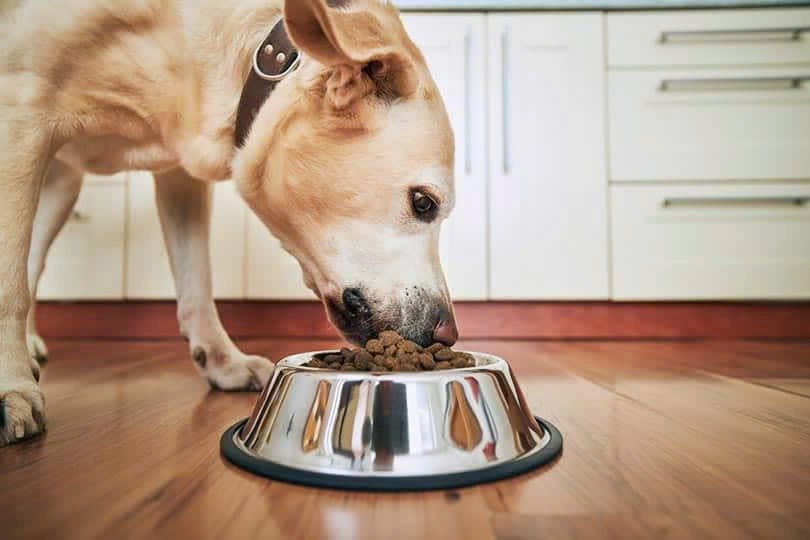
How Much Should You Feed Your Dog? 5 Simple Tips

How much should you feed your dog? The answer depends on your dog’s age, size, activity level, and health.
There is no single feeding amount that works for every dog. The feeding guidelines on your dog’s food package are a useful starting point, but your dog’s individual needs may be different.
For a broader look at what dogs need nutritionally, see our guide to essential nutrients for dogs.
Here are five simple things to consider.
1. Start With the Food Label
Most dog foods provide feeding guidelines based on your dog’s weight.
How much should you feed your dog? Start with the feeding guide on the package, then adjust based on your dog’s individual needs. Pay attention to:
- Body size and weight — larger dogs generally need more food.
- Age and life stage — puppies and growing dogs may have different energy needs.
- Activity level — active dogs may need more energy than less active dogs.
- Food calories — different foods can provide different amounts of energy per serving.
Use these recommendations as a starting point rather than an exact rule. Different foods can contain different amounts of calories, so the same amount of food does not always provide the same nutrition.
2. Consider Your Dog’s Age
Puppies usually need more energy to support growth, while adult dogs generally need food to maintain their health and activity.
Senior dogs may have different nutritional needs as their activity level changes.
In simple terms:
- 🐶 Puppies → support growth
- 🐕 Adult dogs → maintain health and energy
- 🐾 Senior dogs → support healthy aging
Learn more about choosing food for puppies, adult dogs, and senior dogs in our guide to dog food for different life stages.
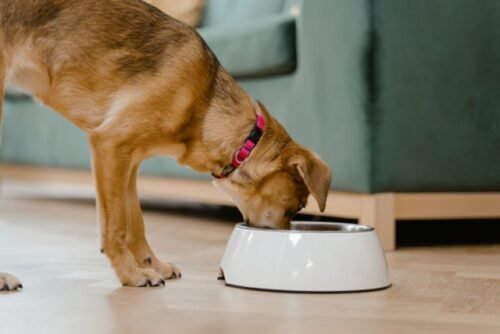
3. Think About Activity Level
An active dog may need more food than a dog that spends most of the day resting.
Working dogs and highly active dogs can have higher energy needs, while less active dogs may need smaller portions.
That’s why two dogs of the same size may not need exactly the same amount of food.
4. Measure Portions
Avoid guessing how much food goes into your dog’s bowl.
Use a measuring cup and follow a consistent feeding schedule. If you give treats during the day, remember that they also contribute to your dog’s overall calorie intake.
5. Watch Your Dog, Not Just the Number
The recommended amount on the package is only a starting point.
Keep an eye on your dog’s:
- Weight
- Body condition
- Activity level
- Appetite
- Digestive health
If your dog is gaining or losing weight unexpectedly, consider adjusting their food intake and speak with a veterinarian if the change continues.
How Much Food Does Your Dog Need?
For many adult dogs, two meals a day is a practical routine. Puppies often need more frequent meals while they are growing.
The most important thing is to maintain a consistent routine and adjust it as your dog’s needs change.
Final Thoughts
There is no single feeding amount that works for every dog.
Start with the food label, consider your dog’s age and activity level, measure portions consistently, and monitor their body condition.
The right amount is the amount that supports your dog’s individual nutritional needs.