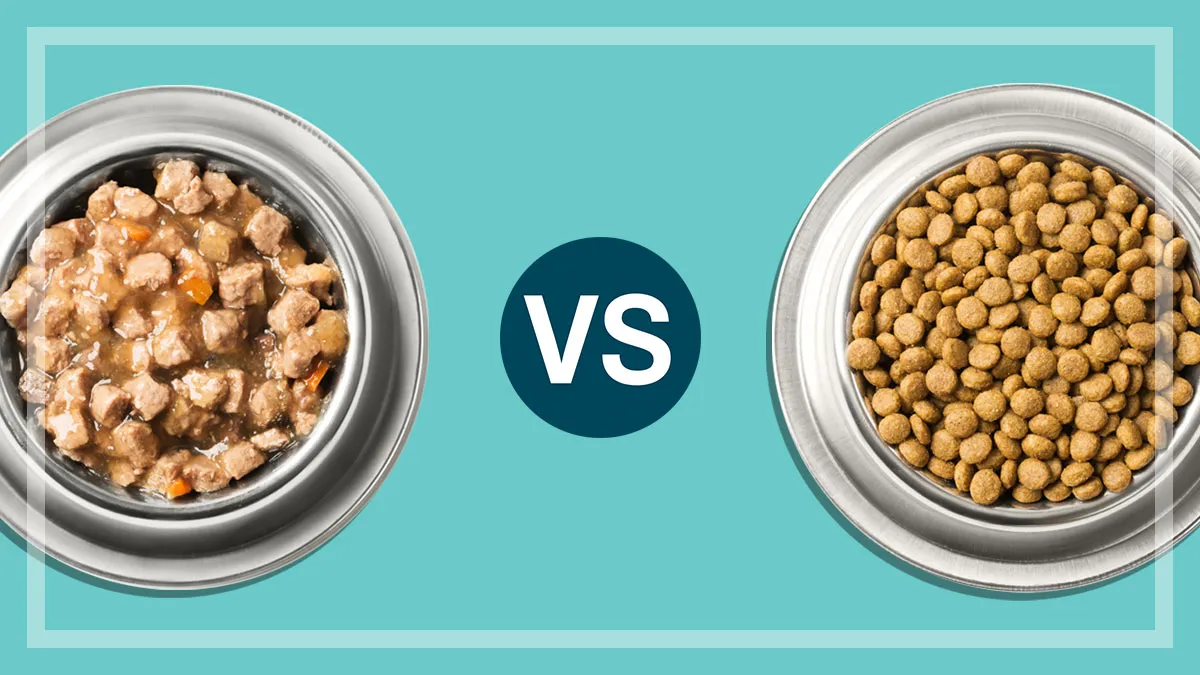
Wet vs. Dry Dog Food: Does Kibble vs. Canned Really Change Digestion?

Wet vs dry dog food digestion is rarely as simple as one format being ‘easy’ and the other ‘hard.’ Once food enters the gastrointestinal tract, what matters is what the diet contains, how it was processed, how much water it carries, and how the individual dog responds. Once food enters the gastrointestinal tract, what matters is what the diet contains, how it was processed, how much water it carries, how its nutrients are structured, and how the individual dog responds.
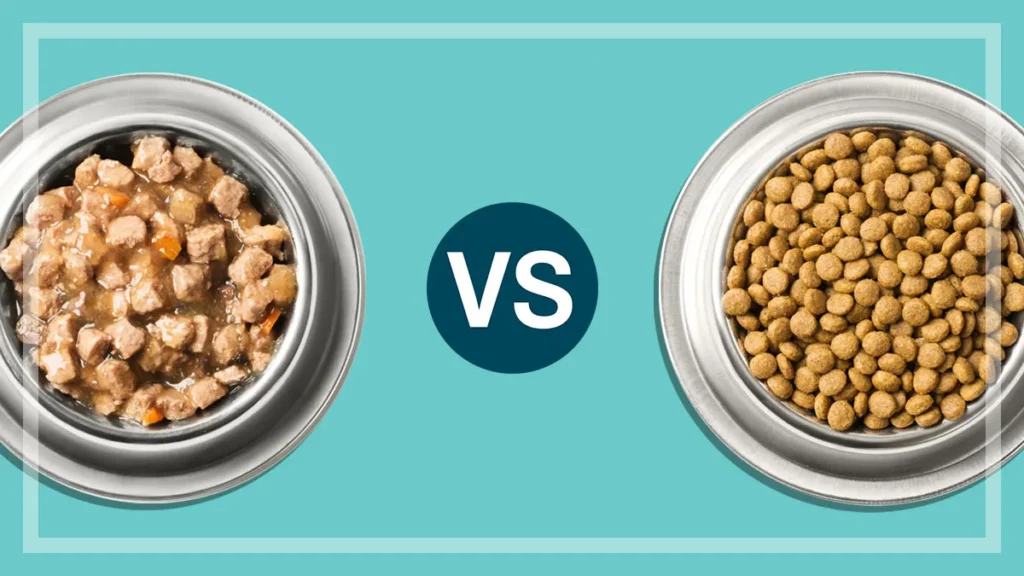
Research comparing canned and dry diets shows that food form can be associated with differences in nutrient digestibility and stool characteristics. But the studies also show an important limitation: wet and dry diets often differ in much more than moisture. Protein, fat, carbohydrate, fiber, energy density, and processing can all change at the same time.
So the better question is not “Is wet food more digestible than kibble?” It is: “What changes in digestion and stool can occur when the whole diet changes from one form to another?”
1. What Does “Digestibility” Actually Mean?
Digestibility is not the same thing as “how comfortable a food feels in the stomach.” In nutrition research, apparent total-tract digestibility generally describes the proportion of a nutrient that disappears from the digestive tract rather than being recovered in feces.
That distinction matters because a food can produce firmer stools without necessarily being more digestible, and a food can be highly digestible while producing softer or wetter feces. Stool appearance is an important practical observation, but it is not a complete measurement of nutrient absorption.
This is one reason it helps to understand the rest of the label before comparing foods. Reading a Dog Food Label: What the Numbers Really Mean explains how moisture, calories, guaranteed analysis, and nutritional adequacy fit together.
2. Does More Water Automatically Mean Better Digestion?
Not necessarily. Water changes the physical environment of a meal, but moisture alone does not determine how completely nutrients are digested.
A useful experiment comes from Zentek, Kaufmann, and Pietrzak (2002), who compared several canned diets with different moisture levels against a standard dry diet in Beagles, German Shepherds, and German Shorthair Pointers. The canned diets ranged from about 60% to 75% moisture. The researchers found only minor differences in apparent digestibility of organic nutrients, while fecal consistency was generally better formed with the dry diet. Importantly, changing the water content within the canned diets did not significantly change fecal consistency. Source: Zentek et al. (2002), The Journal of Nutrition.
That finding is useful because it separates two ideas that are often mixed together: a wet diet can produce wetter stools, but that does not mean the water itself made the food easier or harder to digest.
3. What Do Direct Wet-vs-Dry Studies Show?
Meyer et al. (1999) studied 66 dogs representing 10 breeds and compared canned and dry commercial diets while controlling dry-matter intake. The study found only small differences in apparent digestibility of crude nutrients between diets. However, fecal dry matter was higher with the dry diet, and larger dogs tended to show less favorable fecal quality and more frequent defecation on the canned diet.
Primary source: Meyer et al. (1999) — PubMed
A more recent experiment adds another layer. In a 2025 study of 24 adult Beagles, researchers switched dogs abruptly from an extruded dry diet to a canned diet. The canned diet showed higher apparent digestibility for dry matter, organic matter, crude protein, and gross energy. At the same time, feces became wetter and less formed after the switch, and several measures of the fecal microbiota and fermentation products changed.
Primary source: 2025 dry-to-canned dog study — PubMed
However, this study does not prove that canned food itself caused the higher digestibility. The dry and wet diets were also very different in macronutrient composition: the dry diet was higher in carbohydrate, while the canned diet was higher in protein and fat. The researchers were therefore studying a whole dietary change, not moisture in isolation.
4. Why Can Wet Food Produce Softer Stool?
The simplest explanation is that the food enters the gastrointestinal system with a very different water load. But stool water is also shaped by fiber, protein, fat, mineral content, fermentation, intestinal transit, and how much water remains bound in the fecal matrix.
Zentek et al. (2002) found that fecal consistency was generally better formed with the dry diet than with the canned diets, while the different moisture levels inside the canned diets did not produce a clear additional effect. The authors therefore suggested that other dietary factors—including the quality and quantity of protein—could be important in determining fecal consistency.
A large 2024 analysis of digestibility-test data from dogs and cats also found that nutrients escaping digestion were associated with stool characteristics. In dogs, higher bypass protein was associated with greater stool moisture and lower firmness, while higher bypass fiber was associated with lower stool moisture and greater firmness.
Primary source: Nutrient Digestive Bypass study — PubMed
In other words, when your dog produces softer stool after changing from kibble to canned food, the moisture in the food may be part of the picture—but it is rarely the only variable worth considering.
5. Kibble Is Not “Harder to Digest” Just Because It Is Dry
Dry kibble has very little water compared with canned food, but that does not automatically make it nutritionally harder to digest. Extrusion and other manufacturing processes can change starch structure, ingredient accessibility, texture, and the final physical properties of the food.
Digestibility therefore depends on the finished formulation rather than simply whether the food is dry. Two kibbles can differ substantially in digestibility, just as two canned foods can differ substantially from each other.
For that reason, it is more useful to think about the complete nutrient profile than to judge a food by form alone. What Nutrients Do Dogs Actually Need? explains why protein, fat, carbohydrates, fiber, vitamins, minerals, and water all belong in the same nutritional picture.
6. The Gut Microbiome Responds to the Whole Diet
Digestion does not stop when the small intestine absorbs nutrients. What reaches the colon becomes substrate for the intestinal microbiota, and the composition of that material can influence fermentation products, fecal pH, stool characteristics, and microbial populations.
The 2025 abrupt-switch study illustrates this clearly. After dogs moved from the dry diet to the canned diet, researchers observed changes in several bacterial groups, fecal short-chain fatty acids, ammonia, and other fermentation-related measurements. Some of the microbiota changes were transient rather than permanent.
This does not mean canned food is “bad for the gut.” It means the gut ecosystem responds to changes in what reaches it. A diet that differs in protein, fat, carbohydrate, fiber, moisture, and processing can create a different intestinal environment.
That is also why a dog that tolerates one food perfectly may develop loose stool after a sudden switch to another food, even when both products are labeled complete and balanced.
7. The Biggest Digestive Risk May Be the Sudden Change
Owners sometimes blame the new food immediately when a dog develops soft stool. But the speed of the transition can matter too.
A sudden switch changes the substrates presented to the digestive tract and its microbial community at the same time. The 2025 Beagle study was intentionally designed around an abrupt dietary change and showed measurable short-term changes in fecal characteristics and microbial composition.
This does not establish a universal rule that every food change must take a particular number of days. Instead, it supports a practical principle: if a dog is sensitive to dietary changes, changing gradually gives the digestive system more opportunity to adapt.
If a dog has persistent vomiting, diarrhea, blood in the stool, marked appetite changes, weight loss, or other concerning signs, the question is no longer simply whether canned or dry food is better. Veterinary assessment is more appropriate.
8. So, Does Canned Food Digest Better Than Kibble?
There is no scientifically sound yes-or-no answer.
Some studies find higher apparent digestibility for particular canned diets. Other studies find only small differences in nutrient digestibility while showing clearer differences in fecal consistency. The reason is that “wet versus dry” is not one controlled nutritional variable. The diets themselves can differ in protein, fat, carbohydrate, fiber, processing, calorie density, and ingredient structure.
The 2002 study is especially useful here: changing moisture within canned diets did not significantly change fecal consistency, suggesting that the presence of more water in the bowl cannot by itself explain every digestive response.
So instead of asking whether one format is inherently easier to digest, look at the individual food and the individual dog.
9. What Should You Watch When Changing Form?
- Stool consistency: Is the stool formed, unusually soft, or watery?
- Defecation frequency: Has the number of bowel movements changed noticeably?
- Appetite: Does the dog willingly eat the new food and maintain a normal appetite?
- Body condition: Is the dog maintaining an appropriate body condition as calories change?
- Vomiting or abdominal discomfort: Are there repeated digestive signs rather than a brief adjustment?
- Overall tolerance: Does the dog remain comfortable, active, and otherwise normal?
Remember that the amount of food may also change when calorie density changes. Adult Dog Maintenance: How Much Is “Enough” When There’s No One-Size-Fits-All Answer explains why feeding amounts need to be adjusted to the individual dog rather than treated as a fixed number.
10. What the Research Really Supports
- Wet and dry diets can produce different stool water content and consistency.
- Differences in apparent nutrient digestibility can occur, but they are not explained by moisture alone.
- Diet composition—especially protein, fat, fiber, carbohydrate, and processing—can influence digestive outcomes.
- A sudden diet change can alter fecal characteristics and the gut microbial environment.
- A food’s physical form is one variable within the whole formulation, not a complete measure of digestive quality.
Quick Summary
Wet food is not automatically easier to digest, and dry kibble is not automatically harder to digest. Research shows that canned and dry diets can differ in nutrient digestibility and stool characteristics, but those outcomes are influenced by the entire formulation—not just moisture.
For everyday feeding, the most useful approach is to choose a complete and balanced food appropriate for the dog’s life stage, monitor the dog’s actual response, and avoid assuming that one food format is universally superior for digestion.
Scientific Sources
- Meyer, H., Zentek, J., Habernoll, H., & Maskell, I. (1999). Digestibility and compatibility of mixed diets and faecal consistency in different breeds of dog. Zentralblatt für Veterinärmedizin A, 46, 155–165.
- Zentek, J., Kaufmann, D., & Pietrzak, T. (2002). Digestibility and effects on fecal quality of mixed diets with various hydrocolloid and water contents in three breeds of dogs. The Journal of Nutrition, 132(6 Suppl 2), 1679S–1681S.
- Impact of an abrupt change from dry to canned diet on digestive function and gut microbiota in dogs. Journal of Animal Science (2025), DOI: 10.1093/jas/skaf143.
- Nutrient Digestive Bypass: Determinants and Associations with Stool Quality in Cats and Dogs. Animals (2024), 14(19), 2778. DOI: 10.3390/ani14192778.
- Martineau, B., & Laflamme, D. P. (2002). Effect of diet on markers of intestinal health in dogs. Research in Veterinary Science, 72(3), 223–227. DOI: 10.1053/rvsc.2002.0548.
- AAFCO. Reading Labels: How to Understand a Dog or Cat Food Label.
- WSAVA Global Nutrition Committee. Nutrition Guidelines and pet-owner nutrition resources.