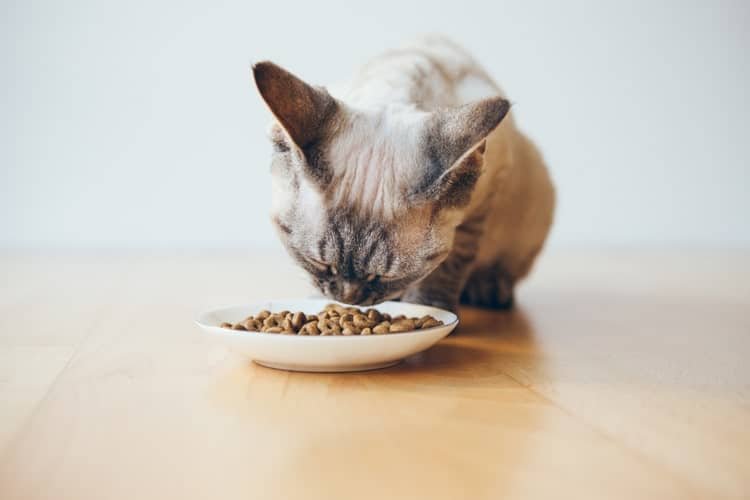
Do Cats Need Supplements? Why “Complete and Balanced” Usually Means No

Walk into a pet store and you will find supplements marketed for cats with almost every imaginable goal: skin and coat, urinary support, immune support, joint health, digestion, calming, and “overall wellness.”
The marketing can make supplementation seem like a basic part of responsible cat care.
But a properly formulated complete and balanced cat food is already designed to supply the nutrients cats need in appropriate amounts and ratios.
AAFCO explains that healthy dogs and cats fed a complete and balanced diet appropriate for their life stage generally do not need nutritional supplements. It also warns that adding supplements on top of a complete diet can push some nutrients beyond desirable or safe levels.
For cats, this principle is especially important because feline nutrition includes species-specific requirements. Cats need nutrients such as taurine, preformed vitamin A, and arachidonic acid in their diet. Those requirements should be accounted for when a commercial cat food is formulated as complete and balanced.
So the better question is not “Which cat supplement should I buy?”
It is: “Is there a specific nutritional reason my cat needs something beyond the complete diet?”
1. “Complete and Balanced” Is the Starting Point
AAFCO explains that “complete” means a food contains all required nutrients, while “balanced” means those nutrients are present in the correct ratios. The nutritional adequacy statement also identifies the species and life stage for which the food is intended.
That matters because cats are not nutritionally interchangeable with dogs. A food formulated for cats must account for feline nutrient requirements.
If a cat is eating an appropriate complete and balanced food as the main diet, the owner normally does not need to calculate individual vitamins and minerals and then add them back with supplements.
That is the purpose of a complete diet.
The exception is when the diet itself is not intended to be complete, or when a veterinarian has identified a specific clinical or nutritional reason for additional supplementation.
2. Cats Have Special Nutrient Requirements — But That Does Not Mean They Need Extra Pills
Cats do have unusual nutritional requirements compared with many other mammals.
Taurine is a classic example. Research has established taurine as an essential nutrient for cats. Cats have a limited ability to synthesize it, and deficiency can cause serious problems including retinal degeneration.
Cats also require preformed vitamin A and arachidonic acid in their diet. These requirements are part of the reason feline nutrition cannot simply be recreated by feeding meat or by adapting a dog diet.
But there is an important distinction:
Cats needing a nutrient does not mean cats eating a complete food need a supplement containing that nutrient.
A properly formulated complete cat food is supposed to supply those nutrients already. The nutrient requirement is a reason to formulate the food correctly—not a reason for every owner to add a separate supplement.
3. Taurine: Essential for Cats, but Not Automatically a Supplement
Taurine is probably the nutrient most likely to appear in discussions about cat supplements.
And for good reason: taurine deficiency has serious consequences. Research has documented retinal degeneration and other problems associated with inadequate taurine intake.
But “cats need taurine” does not equal “every cat needs extra taurine powder.”
Commercial complete and balanced cat foods are formulated to provide taurine as part of the nutritional profile. The more relevant question is whether the cat’s actual diet is nutritionally complete.
Homemade diets are different. A study evaluating 114 recipes for home-prepared feline maintenance diets found widespread nutritional inadequacy, and taurine adequacy could not always be confirmed. In that situation, targeted supplementation can be an essential part of a properly formulated recipe.
Taurine is therefore a good example of the broader rule: supplement the diet when the diet needs supplementation, not simply because the nutrient is important.
4. Vitamins: Cats Need Them, but Excess Can Also Be a Problem
A vitamin is not automatically safe just because it is essential.
Vitamin D provides a clear example. Cats need vitamin D, but excessive intake can cause serious toxicity. Published case reports and case series have documented hypercalcaemia and other complications in cats exposed to excessive vitamin D, including from improperly formulated complementary foods and from direct supplement exposure.
Vitamin A also illustrates why “more” is not necessarily better. Cats require preformed vitamin A, but chronic excessive intake can cause toxicity.
This is why a broad multivitamin should not be treated as nutritional insurance.
If a complete and balanced cat food already supplies the required vitamins, adding a second source may simply increase total intake. A targeted vitamin supplement makes more sense when there is a documented deficiency, a diet-formulation issue, or a specific veterinary indication.
5. Minerals: Balance Matters More Than a Bigger Number
Calcium, phosphorus, zinc, copper, iodine, and selenium are essential to feline health. But mineral supplementation is not a simple “add more for extra health” decision.
Calcium and phosphorus need to be supplied in appropriate amounts and relationships. Selenium is required in very small quantities, and excessive amounts can become toxic.
This is especially important for kittens. Growth diets are formulated with specific nutrient concentrations and ratios. Adding calcium or a broad mineral product to an already complete kitten food can disturb the balance the original formulation was designed to provide.
The question is not whether the mineral is important. It is whether the cat’s current diet already provides the appropriate amount.
6. Omega-3s: More Nuanced Than “Every Cat Needs Fish Oil”
Omega-3 fatty acids are one of the supplement categories where the evidence is more interesting—but also more condition-specific.
Research in dogs provides stronger evidence for some clinical uses than research in cats, so evidence should not automatically be transferred across species. A 2022 systematic review and meta-analysis covering canine and feline osteoarthritis found evidence for omega-3-enriched diets and omega-3 supplements overall, but the evidence base was dominated by canine studies.
A 2025 review of feline osteoarthritis also discussed omega-3-enriched therapeutic diets as a potentially useful part of management.
That does not mean every healthy cat needs a fish-oil supplement.
A cat’s existing diet may already contain omega-3 fatty acids, and the amount, source, dose, and clinical goal all matter. Fish oil also adds calories.
Omega-3 is therefore best treated as a targeted nutritional tool rather than a universal requirement.
7. Joint Supplements: Be Careful With Evidence From Dogs
Glucosamine, chondroitin, green-lipped mussel products, and other joint supplements are widely marketed for cats.
The challenge is that feline evidence is much thinner than the marketing can make it sound.
The 2022 systematic review of nutraceuticals for canine and feline osteoarthritis found stronger evidence for omega-3-enriched approaches than for several other nutraceutical categories. A 2025 review of feline osteoarthritis also emphasized that feline evidence should be assessed specifically rather than simply extrapolated from other species.
For an older cat with suspected osteoarthritis, a supplement should therefore not be the first or only response. Veterinary assessment, weight management, pain management, environmental adjustments, and an appropriate diet may all be relevant.
The supplement question comes after the clinical question: what problem are we actually trying to manage?
8. Homemade Diets Are the Biggest Reason This Rule Changes
A homemade diet is fundamentally different from a commercial food that is complete and balanced.
A 2019 evaluation of 114 recipes for home-prepared feline maintenance diets found nutritional problems across the recipes evaluated. Many had nutrients below recommended amounts, and taurine adequacy could not always be confirmed.
A separate review of commercial versus homemade cat diets concluded that generic recipes from the internet carry risks of deficiencies and imbalances and recommended that homemade diets be formulated with veterinary nutrition expertise.
This is where supplements can be genuinely important.
If a veterinary nutrition professional designs a homemade diet that requires taurine, vitamins, minerals, or other nutrients, those supplements are not “extras.” They are part of making the diet nutritionally complete.
The mistake is not using supplements. The mistake is using them without a properly formulated nutritional plan.
9. What About “Immune,” “Urinary,” or “Skin & Coat” Supplements?
These labels describe marketing categories, not automatically proven clinical outcomes.
A product may contain vitamins, minerals, fatty acids, botanical ingredients, or other compounds. Ask:
- What specific health outcome has been studied in cats?
- Which ingredient is supposed to produce that effect?
- At what dose?
- In which cats?
- Was the study measuring a clinical outcome or only a laboratory marker?
- Is the nutrient already supplied by the main diet?
For urinary products, a supplement cannot replace appropriate diagnosis and management of urinary disease. For skin and coat products, the first question is whether there is an underlying disease, dietary issue, or deficiency.
“Supports” on a package is not the same thing as “proven to treat.”
10. A Simple Supplement Decision Tree for Cat Owners
Before adding a supplement, work through these questions:
1. Is my cat’s main food complete and balanced for cats and the correct life stage?
2. Is the product intended for cats?
3. What exact nutrient or clinical problem am I trying to address?
4. Is there research in cats supporting that use?
5. Does the current diet already provide the nutrient?
6. Could the supplement add excessive nutrients or meaningful calories?
7. Is my veterinarian aware of the supplement, especially if my cat has a medical condition or takes medication?
If you cannot clearly answer questions 3 and 4, there may not be a strong reason to add the supplement.
And if the cat is eating a homemade diet, the better solution may be to formulate the entire diet correctly rather than choosing supplements one at a time.
The Bottom Line
Do cats need supplements?
Usually, not if they are healthy and eating an appropriate complete and balanced cat food.
Cats absolutely have special nutrient requirements. Taurine, preformed vitamin A, arachidonic acid, and other nutrients are essential parts of feline nutrition. But those requirements are precisely why a properly formulated complete cat food contains them.
Supplements become more relevant when the diet is homemade or incomplete, when a deficiency or increased requirement has been identified, or when a veterinarian recommends a targeted nutritional intervention.
The most useful rule is simple:
A cat does not need a supplement merely because the nutrient is important. The question is whether the cat’s actual diet and health situation create a reason to add it.
Complete and balanced nutrition is the foundation. Supplementation should solve a specific problem—not create a new one.
For feline-specific nutrient requirements, see Essential Nutrients Cats Need That Dogs Don’t: Understanding Obligate Carnivores before deciding whether a supplement fills a real gap.
To understand the nutritional adequacy statement, see Cat Food Labels: What “Complete and Balanced” Really Means.
For moisture and food-format questions, see Wet vs. Dry Cat Food: Which Is Better for Your Cat?.
Scientific Sources / References
- AAFCO. Supplements. — https://www.aafco.org/consumers/understanding-pet-food/supplements
- AAFCO. Selecting the Right Pet Food. — https://aafco.org/consumers/understanding-pet-food/selecting-the-right-pet-food
- AAFCO. Reading Labels. — https://aafco.org/consumers/understanding-pet-food/reading-labels/
- WSAVA Global Nutrition Committee. Frequently Asked Questions and Myths. — https://wsava.org/wp-content/uploads/2020/01/Frequently-Asked-Questions-and-Myths.pdf
- Knopf et al. Taurine: an essential nutrient for the cat. 1978. — https://pubmed.ncbi.nlm.nih.gov/641594/
- FEDIAF/Review literature on feline amino-acid nutrition: Amino Acids in the Nutrition, Metabolism, and Health of Domestic Cats. 2021. — https://pubmed.ncbi.nlm.nih.gov/33770409/
- Evaluation of the nutritional adequacy of recipes for home-prepared maintenance diets for cats. 2019. — https://pubmed.ncbi.nlm.nih.gov/31039096/
- Commercial vs Homemade Cat Diets: What you need to know. 2022. — https://pubmed.ncbi.nlm.nih.gov/35311418/
- Barbeau-Grégoire et al. Systematic Review and Meta-Analysis of Enriched Therapeutic Diets and Nutraceuticals in Canine and Feline Osteoarthritis. 2022. — https://pubmed.ncbi.nlm.nih.gov/36142319/
- Osteoarthritis in cats: what we know, and mostly, what we don’t know… yet. 2025. — https://pubmed.ncbi.nlm.nih.gov/40685570/
- Acute vitamin D toxicosis in an adult cat. 2026. — https://pubmed.ncbi.nlm.nih.gov/42256055/
- Cholecalciferol (Vitamin D3) Toxicity Observed in Five Cats. 2021. — https://pubmed.ncbi.nlm.nih.gov/34490396/