Indoor vs Outdoor Cat Nutrition: Do Their Needs Really Differ?

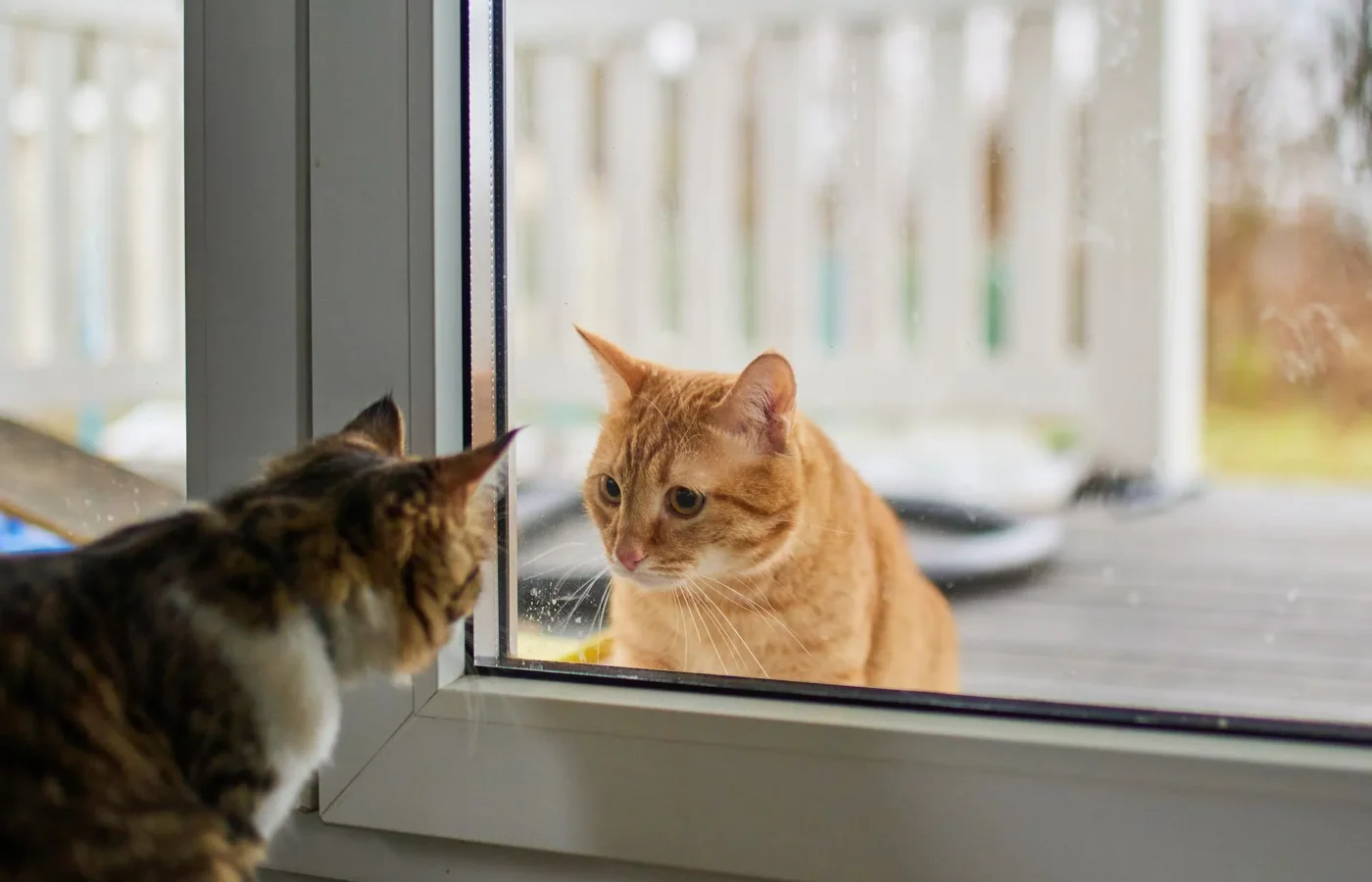
Indoor vs outdoor cat nutrition is a common question, but living inside or outside does not automatically mean a cat needs a completely different type of food.
The bigger question is how lifestyle changes a cat’s energy needs, activity level, body condition, and feeding pattern.
An indoor cat that spends most of the day sleeping may need fewer calories than a highly active outdoor cat. But an outdoor cat that is neutered, relatively sedentary, or already gaining weight may not need substantially more food at all.
So rather than asking, “Is indoor food or outdoor food better?”, it is more useful to ask: How active is this particular cat, and is its current diet helping maintain a healthy body condition?
Does an Outdoor Cat Actually Need More Food?
Sometimes—but not simply because it goes outside.
A cat’s energy requirements are influenced by several factors, including activity level, age, body condition, neuter status, and health status. Veterinary nutrition guidelines therefore recommend individualizing feeding rather than assigning one calorie target to every cat.
- walks or explores larger areas
- climbs, runs, or plays
- spends time hunting or stalking
- faces environmental challenges such as cold weather
But outdoor access does not guarantee high activity.
Some outdoor cats spend much of their time resting, sleeping, or waiting near the home. Meanwhile, an indoor cat may be very active if it regularly plays, climbs, chases toys, or uses food puzzles.
Lifestyle matters—but actual activity matters more than the label “indoor” or “outdoor.”
Indoor Cats Are Not Automatically “Low-Activity” Cats
One of the easiest assumptions to make is: Indoor cat = inactive cat.
That is not necessarily true.
Cats naturally have short periods of activity spread throughout the day. Indoor cats can express these behaviors through play, climbing, chasing, exploration, and food-seeking activities.
The problem is that an indoor environment can make it easier for some cats to become sedentary, especially when food is constantly available.
AAHA/AAFP guidelines note that free-choice feeding can predispose cats to overconsumption, while maintaining a healthy body weight requires monitoring and controlling caloric intake.
This is one reason that feeding an indoor cat based purely on appetite can sometimes lead to gradual weight gain.
If your cat’s lifestyle is mostly sedentary, the more useful question is not whether the food is marketed as “indoor.” It is whether the amount and calorie density of the diet match your cat’s actual needs.
What About “Indoor Cat Food”?
“Indoor” is often used as a product-positioning term rather than a universal nutritional category.
There is no single formula that every indoor cat requires simply because it lives inside.
Some indoor formulas are designed with lower calorie density or additional fiber to help with weight management or satiety. Those features may be useful for some cats—but they are not automatically necessary for every indoor cat.
The same principle applies to outdoor cats.
An outdoor cat does not automatically need a higher-calorie food simply because it has access to the outdoors.
The diet should still provide complete and balanced nutrition appropriate for the cat’s life stage and health status, while the feeding amount is adjusted according to the individual cat.
AAHA/AAFP guidance emphasizes assessing factors such as age, reproductive status, body condition, muscle condition, activity level, and disease when developing a nutritional plan.
Indoor vs Outdoor Cat Nutrition: Calories and Body Condition Matter Most
For many adult cats, the most important difference between indoor and outdoor lifestyles may be how much energy they actually use.
Consider two cats:
| Cat A — Indoor | Cat B — Outdoor |
| 5 kg | 5 kg |
| Neutered | Neutered |
| Spends much of the day sleeping | Regularly explores outdoors |
| Plays for only a few minutes | Actively plays and climbs |
| Gradually gaining weight | Maintains a lean body condition |
They weigh the same, but their energy requirements may not be identical.
This is why feeding recommendations should be treated as starting points rather than fixed prescriptions.
WSAVA’s calorie guidance for healthy adult cats provides ranges by body weight and specifically notes that individual cats may require more or less food to maintain an ideal, trim body condition.
If you are unsure how much food your cat actually needs, start with How Much Should You Really Feed Your Cat?.
Body Condition Matters More Than Indoor vs. Outdoor
One of the most useful ways to evaluate whether a feeding plan is working is to monitor body condition, not simply the number of grams in the bowl.
A cat can be eating the amount recommended on a food package and still gain too much weight.
Likewise, another cat may need an adjustment because it is losing weight despite apparently following the feeding instructions.
Veterinary guidelines commonly use Body Condition Score (BCS) to assess whether a cat is carrying an appropriate amount of body fat. WSAVA provides body-condition tools specifically for this purpose.
This makes BCS more useful than asking: “How many grams should every 5-kg cat eat?”
A better question is: “Is this amount keeping this particular cat at a healthy body condition?”
Does Outdoor Access Change What Nutrients a Cat Needs?
Usually, outdoor access does not fundamentally change the basic nutrient requirements of a healthy adult cat.
Cats still require the essential nutrients appropriate to their species and life stage, regardless of whether they live indoors or outdoors.
What may change is the feeding strategy.
- Higher or more variable activity
- Unpredictable access to food outside the home
- Opportunities to hunt
- Greater exposure to environmental stressors
- A different daily activity pattern
These factors can make it harder for an owner to estimate exactly how much the cat is eating and expending.
An outdoor cat that regularly hunts may also consume prey, but that does not mean hunting should be treated as a reliable or nutritionally complete substitute for a properly formulated diet.
The foundation should still be a complete and balanced diet, with the overall feeding plan adjusted to the individual cat.
What About Hydration?
Lifestyle can also influence how you think about hydration.
Cats naturally have a relatively low thirst drive compared with many other animals, and total water intake comes from both drinking and food.
This makes food moisture relevant—but it does not mean that indoor cats must eat wet food or outdoor cats must eat dry food.
Both wet and dry diets can be formulated to provide complete and balanced nutrition.
The more useful consideration is the individual cat’s overall water intake, health status, food type, and feeding pattern.
If you are comparing food formats, see Wet vs. Dry Cat Food: What Actually Matters? – the key is your cat’s overall water intake, not assuming one format is automatically better for every cat.
Should Indoor Cats Be Fed Less Than Outdoor Cats?
Not automatically.
An indoor cat may need fewer calories if it is less active, but the actual amount should be based on its individual needs and response.
Similarly, an active outdoor cat may need more energy—but not every outdoor cat is highly active.
A practical approach is:
Start with the food’s feeding guidance → consider the cat’s activity and lifestyle → monitor body weight and body condition → adjust when necessary.
This is much more reliable than using a simple rule such as:
Indoor = less food
Outdoor = more food
A Simple Way to Compare Your Cat’s Lifestyle
| Factor | What to consider |
| Activity | Does your cat regularly play, run, climb, or explore? |
| Body condition | Is your cat lean, ideal, overweight, or losing weight? |
| Neuter status | Has energy expenditure changed since neutering? |
| Age | Is your cat a kitten, adult, mature adult, or senior? |
| Health | Are there medical conditions affecting appetite, weight, or metabolism? |
| Food | How calorie-dense is the current diet? |
| Feeding pattern | Is food measured, portioned, or freely available? |
| Outdoor food | Does the cat hunt or receive food elsewhere? |
What Should You Actually Feed?
The starting point should be a diet that provides complete and balanced nutrition appropriate for your cat’s life stage and individual health needs.
From there, the amount should be adjusted according to body condition, activity, weight trend, appetite, health status, and calorie density of the food.
If you are still building your understanding of feline nutrition, Essential Nutrients for Cats explains the nutritional foundation before you make more detailed feeding decisions.
For older cats, Senior Cats: How Nutritional Needs Change as Kidney and Metabolic Health Shift explores how age and health can make nutrition more individualized.
The Bottom Line
Indoor and outdoor cats can have different nutritional needs—but not simply because one lives inside and the other lives outside.
The bigger determinants are activity level, body condition, age, neuter status, health, and actual calorie intake.
An active outdoor cat may require more energy than a sedentary indoor cat. But an active indoor cat and a sedentary outdoor cat can easily have similar needs.
So instead of choosing food based only on the words “indoor” or “outdoor,” look at the whole picture.
The best feeding plan is the one that provides complete and balanced nutrition while helping that individual cat maintain a healthy body condition over time.
Scientific Basis
This article draws primarily on AAHA/AAFP Feline Life Stage Guidelines and WSAVA Global Nutrition Guidelines, particularly their emphasis on individualized nutritional assessment, activity level, body condition, calorie intake, and life stage.