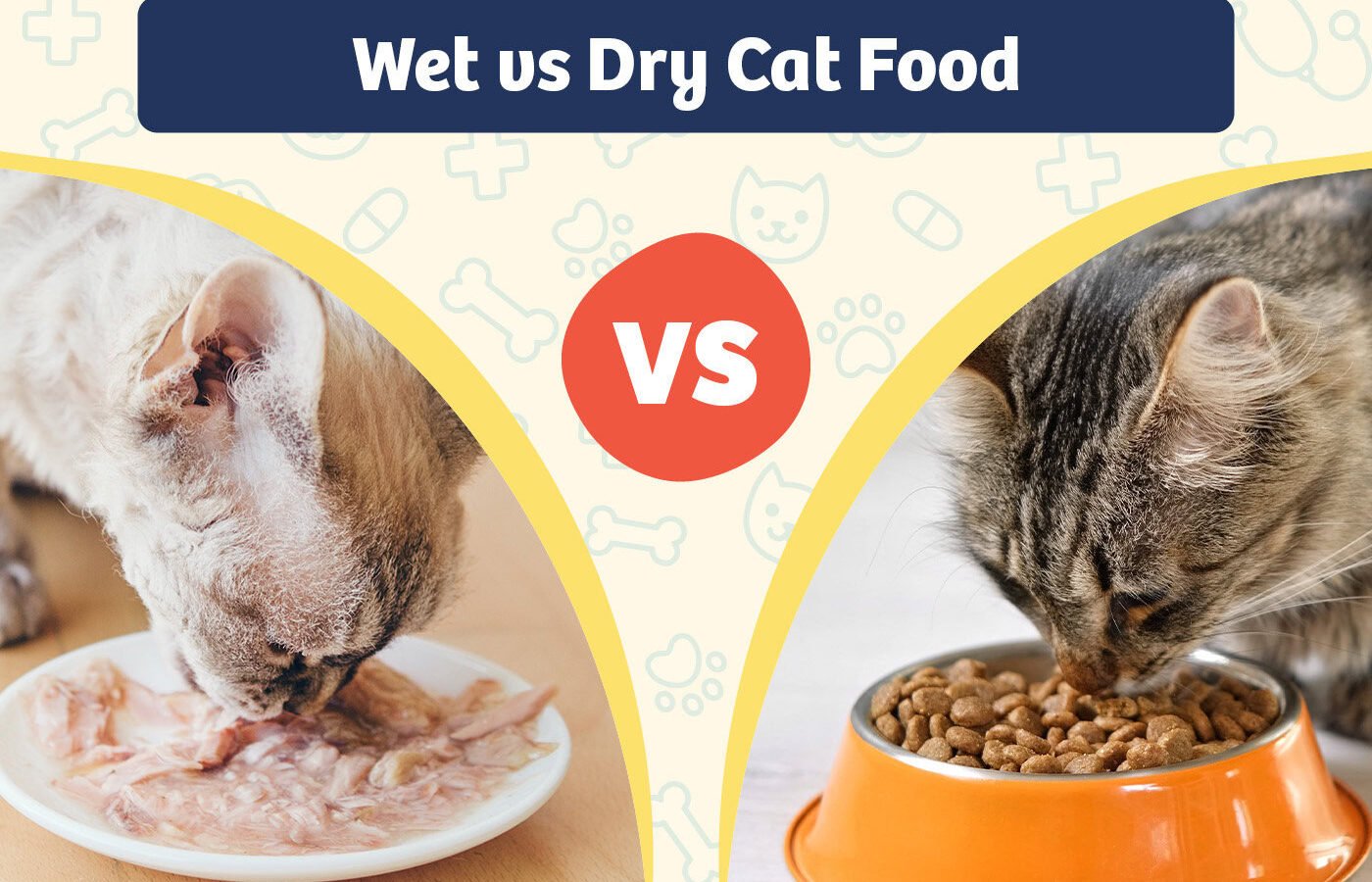
Wet vs. Dry Cat Food: Which Is Better for Your Cat?

Choosing between wet vs dry cat food can feel confusing, especially when different products make different claims about nutrition, hydration, and ingredients.
The good news is that both wet and dry cat food can provide complete and balanced nutrition when they are properly formulated for cats and the appropriate life stage. The main differences are moisture content, texture, calorie density, storage, convenience, and how each food fits into your cat’s daily feeding routine.
Wet food contains substantially more water than dry food, which can contribute to your cat’s overall daily water intake. Dry food contains much less moisture, so cats eating primarily dry food should always have access to fresh, clean drinking water.
If you’re still learning how to evaluate cat food, start with Essential Nutrients for Cats
Wet vs. Dry Cat Food: What’s the Difference?
The biggest nutritional difference between wet and dry cat food is moisture.
According to Cornell University College of Veterinary Medicine, canned cat food generally contains at least 75% moisture, while dry cat food typically contains around 6–10% water.
| Wet Cat Food | Dry Cat Food | |
| Moisture | High | Low |
| Texture | Soft | Crunchy |
| Storage | Refrigerate after opening | Easy to store |
| Convenience | Moderate | High |
| Water from food | Higher | Lower |
| Portioning | Requires measuring | Usually easy to measure |
Neither format is automatically healthier. What matters most is whether the food is nutritionally appropriate for your cat and how it fits into the cat’s individual needs and feeding routine.
Wet Cat Food
Wet food is often sold in cans, trays, or pouches and contains substantially more water than dry food.
Potential benefits
- 💧 Higher moisture content
- 🐱 Soft texture that many cats find appealing
- 🚰 Can contribute more water through food
- 🍽️ Can be useful for cats that prefer moist food
Cats obtain water both by drinking and through the water contained in food. Cornell notes that wet food can contain up to about 80% water, so cats eating wet food may drink less directly because they are obtaining more water from their meals.
Potential drawbacks
- 💰 Often more expensive per feeding
- ❄️ Opened food generally needs refrigeration
- 📦 Less convenient to store and serve than dry food
- 🕐 May require more frequent meal preparation
Wet food can therefore be particularly useful when increasing dietary moisture is a priority, but it is not automatically the right choice for every cat.
Dry Cat Food
Dry food is convenient, easy to measure, and generally easier to store than wet food.
Potential benefits
- 📦 Easy to store
- 📏 Simple to measure and portion
- 💰 Often more economical
- 🕐 Convenient for regular feeding routines
Potential drawbacks
- 💧 Contains much less moisture than wet food
- 🚰 Cats eating mainly dry food need reliable access to fresh water
- 🍽️ Free-feeding can lead some cats to consume more calories than they need
Cornell notes that free-feeding can be acceptable for some cats, but for others it may contribute to overeating and inappropriate weight gain.
For this reason, measuring the daily portion can be a better approach than continually refilling the bowl, particularly for cats that tend to overeat.
Is Wet Food Better for Hydration?
This is one of the most important differences between wet and dry food.
Cats eating wet food receive a substantial amount of water directly from their meals. Cats eating dry food receive much less water from food and therefore rely more heavily on drinking to meet their water needs.
However, this does not mean that every cat must eat wet food.
The important goal is adequate overall hydration. Fresh water should be available to every cat at all times. Some cats may also drink more when provided with multiple water bowls or a water fountain.
If your cat has a medical condition that affects hydration or urinary or kidney health, food choice should be discussed with your veterinarian rather than based solely on whether the food is wet or dry.
Can You Feed Both Wet and Dry Cat Food?
Yes.
A mixed feeding approach can combine the convenience of dry food with the additional moisture provided by wet food.
For example, a cat might receive a measured portion of dry food together with a smaller wet-food meal.
The important point is to consider the total amount of food and calories your cat receives throughout the day. Adding wet food on top of the normal dry-food portion without adjusting the total amount can unintentionally increase calorie intake.
If you’re unsure how much your cat should eat, see How Much Should You Feed Your Cat.
Which Is Better for Your Cat?
There is no universal winner.
Wet food may be a good option if:
- Your cat prefers moist or soft food
- You want to increase water intake through food
- Your cat does not drink much water
- Wet food fits comfortably into your feeding routine
Dry food may be a good option if:
- Convenience and storage are important
- Your cat does well with measured dry portions
- You prefer an easy-to-store food format
- Your cat has reliable access to fresh drinking water
A combination may work well if:
- Your cat enjoys both textures
- You want some of the additional moisture from wet food
- Dry food is convenient for part of the feeding routine
- You can keep the total daily amount appropriately portioned
The best choice depends on your cat’s nutritional needs, hydration, preferences, body condition, and daily routine.
What Should You Check on the Label?
Whatever format you choose, don’t evaluate the food based only on whether it is wet or dry.
- Complete and balanced
- Appropriate for your cat’s life stage
- Formulated specifically for cats
- Appropriate in calorie density for your cat
- Accompanied by clear feeding directions
AAFCO identifies the nutritional adequacy statement as one of the most important parts of a pet food label. It indicates whether the food is intended to provide complete and balanced nutrition for a particular species and life stage.
For more detail, see How to Read a Pet Food Label.
You can also learn how to interpret the guaranteed analysis in What Is Guaranteed Analysis in Pet Food?.
Wet vs. Dry Cat Food: What Actually Matters
The differences are practical rather than a simple matter of one format being “healthy” and the other being “unhealthy.” What matters most is moisture, calorie density, and how well the format fits your cat’s routine — not the format itself.
Final Thoughts
Wet and dry cat food can both be healthy choices when they provide complete and balanced nutrition appropriate for your cat.
Wet food provides substantially more moisture and may help increase water intake through meals, while dry food offers convenience, easy storage, and simple portioning.
Instead of asking “Which is better: wet or dry cat food?”, consider a more useful question:
Which feeding approach provides appropriate nutrition, adequate hydration, suitable portions, and a routine that works for my cat?
For more guidance, explore our Cat Nutrition and Pet Food guides.
Scientific Sources
Cornell University College of Veterinary Medicine — Feeding Your Cat
AAFCO — How to Understand a Dog or Cat Food Label
Cornell University College of Veterinary Medicine — Hydration in Cats
Cornell University College of Veterinary Medicine — How Often Should You Feed Your Cat?