Grain-Free, Raw, or Traditional Kibble: Comparing the Evidence, Not the Trends

Dog food trends can make one feeding style sound automatically better than another. Grain-free recipes may be marketed as more natural, raw diets may be promoted as closer to a dog’s ancestral diet, and traditional kibble may be dismissed as overly processed. But nutrition is more complicated than a label or feeding style. A better question is whether the diet is complete and balanced, appropriate for the dog’s life stage and condition, safe to feed, and supported by credible evidence.
If you are still building the basics, start with what dogs need in their diet. It helps put the grain-free, raw, and kibble debate into the larger context of canine nutritional requirements.
Table of Contents
The first question is not “grain-free or not?”
When comparing dog foods, the most useful starting point is nutritional adequacy rather than a single ingredient category. AAFCO explains that a complete and balanced food should provide the required nutrients in the correct amounts and ratios for its intended life stage. Reading the nutritional adequacy statement is therefore more informative than assuming that one fashionable ingredient choice determines food quality.
That means the absence of grains does not automatically make a food more nutritious, and the presence of grains does not automatically make a food inferior. The overall formulation matters.
1. What does “grain-free” actually mean?
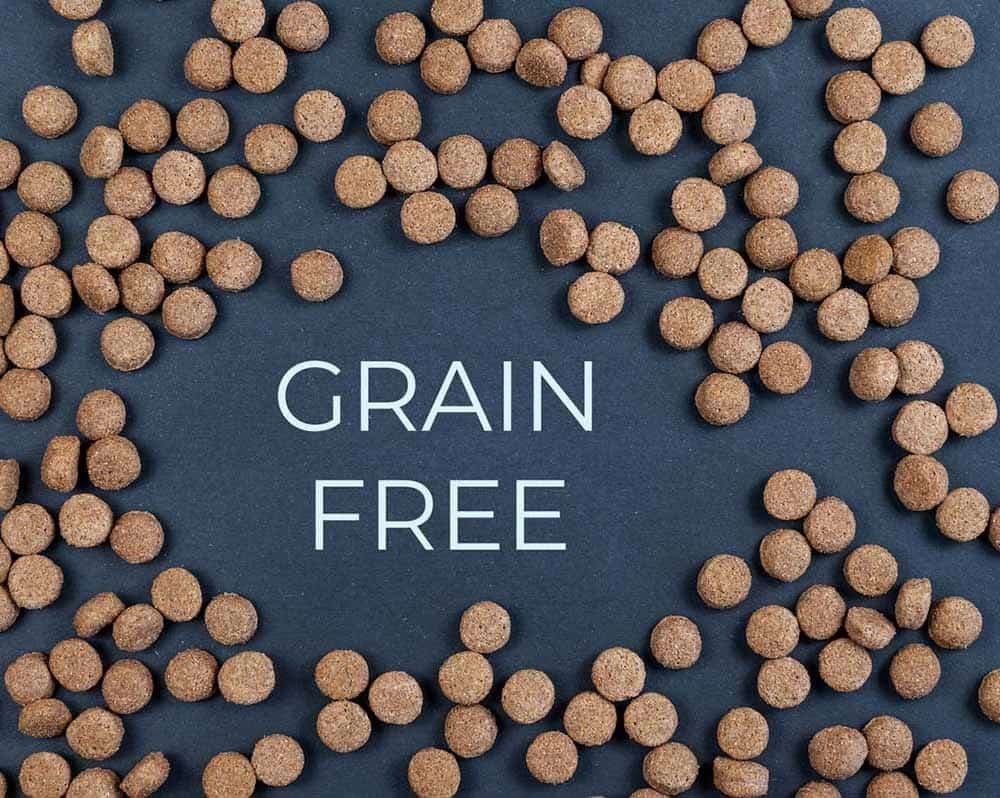
Grain-free dog food is formulated without cereal grains such as corn, wheat, rice, barley, or similar grains. Removing grains does not mean removing carbohydrates. Grain-free formulas often use other carbohydrate sources, including potatoes, peas, lentils, chickpeas, or other legumes.
This is one reason it helps to look at the ingredient list as part of the whole formulation rather than treating “grain-free” as a quality rating. The replacement ingredients matter too.
WSAVA notes that cereal grains are not simply “fillers.” Properly cooked grains can provide energy, fiber, essential fatty acids, vitamins, and minerals, and there is no general evidence that grains are inherently harmful to dogs when the overall diet is complete and balanced.
So if a dog does well on a complete and balanced food containing grains, there is no nutritional reason to remove grains simply because they are perceived as undesirable.
2. What about the grain-free and canine DCM concern?
This is where the evidence deserves careful wording. The FDA investigated reports of non-hereditary canine dilated cardiomyopathy (DCM) in dogs eating certain diets, many of which were labeled grain-free and contained peas, lentils, other pulses, and/or potatoes high in the ingredient list. However, the FDA has not established a simple causal rule that “grain-free causes DCM.”
More recent FDA information describes non-hereditary DCM as a complex condition that may involve interactions among genetics, underlying health, diet, ingredient characteristics, processing, formulation, and feeding practices. Reports have involved both grain-free and grain-containing diets.
The practical takeaway is not to create another absolute food rule. If a dog has heart disease or another relevant health concern, diet decisions should be discussed with a veterinarian. For general food selection, focus on the complete-and-balanced status of the food, life stage, calorie density, formulation, and the individual dog’s needs.
3. Is raw dog food more natural — and therefore better?
“Natural” and “better” are not interchangeable. Raw diets can contain nutritious animal-derived ingredients, but they also create food-safety and formulation challenges.
AAHA does not advocate feeding pets raw or dehydrated nonsterilized animal-origin foods because of the risk of bacterial and protozoal pathogens. Dogs may also shed pathogens without showing obvious illness, creating a potential household risk.
There is another issue: nutritional completeness. A homemade raw recipe can look impressive on paper while still being deficient or imbalanced in calcium, phosphorus, trace minerals, vitamins, or other nutrients. AAFCO emphasizes that complete and balanced nutrition depends on meeting nutrient requirements and maintaining appropriate ratios, not simply including meat or other whole-food ingredients.
If an owner wants to feed a home-prepared diet, formulation by a board-certified veterinary nutritionist is a safer way to reduce the risk of nutritional imbalance.
4. Does traditional kibble automatically mean lower quality?
No. Kibble is a processing method, not a nutritional grade. A dry food can be complete and balanced and appropriately formulated for a dog’s life stage and condition.
This is also why a broader life-stage comparison of dog food can be more useful than choosing a food solely because it is raw, fresh, grain-free, or traditional.
The same principle applies in the other direction: a raw, freeze-dried, fresh, or minimally processed food is not automatically nutritionally superior. Processing, ingredient sourcing, digestibility, nutrient density, safety controls, and the finished formulation all matter.
WSAVA specifically cautions owners against judging food quality primarily from the ingredient list. Ingredient lists can be useful, but they do not tell the whole story about nutrient quality or the finished diet.
5. How should you compare the three approaches?
- Grain-free: Ask why grains are being avoided and whether the replacement ingredients create a diet that is complete and balanced for the dog.
- Raw: Consider both nutritional adequacy and food-safety risks. Homemade diets deserve particular attention to formulation.
- Traditional kibble: Do not assume that dry processing makes a food inferior. Check the nutritional adequacy statement, intended life stage, feeding directions, calories, and manufacturer information.
A practical checklist for choosing a dog food
1. Is the food intended for dogs and the correct life stage?
2. Does the label provide a nutritional adequacy statement for complete and balanced nutrition?
3. Are the feeding directions appropriate for the dog’s size and life stage?
4. Does the calorie density fit the dog’s activity level and body condition?
5. Are there medical reasons to avoid or modify particular ingredients?
6. Can the manufacturer provide useful information about formulation, quality control, and nutritional expertise?
7. If the diet is homemade, has it been formulated specifically for the dog by a qualified veterinary nutrition professional?
What about dogs with food allergies?
Food allergies are a separate issue from general preferences about grains. If a veterinarian suspects a food allergy, the appropriate diet should be selected based on the suspected allergens and the diagnostic plan. Simply switching to a grain-free food is not the same as performing a controlled elimination diet.
The bottom line
There is no single “best” feeding style simply because it is grain-free, raw, fresh, or traditional kibble. The strongest starting point is a diet that is complete and balanced, appropriate for the dog’s life stage and condition, safe to handle, and suitable for the individual dog.
The goal is not to follow the newest food trend. It is to make a nutrition decision based on the whole diet rather than one fashionable feature.
Quick summary
- Grain-free does not automatically mean more nutritious.
- Grains are not inherently harmful to dogs when properly included in a complete and balanced diet.
- The FDA has investigated a possible relationship between certain diets and non-hereditary DCM, but has not established a simple “grain-free causes DCM” rule.
- Raw diets can create food-safety and nutritional-balance challenges.
- Kibble is a processing format, not a measure of nutritional quality.
- Complete-and-balanced status, life stage, calories, formulation, safety, and the individual dog’s needs matter more than marketing trends.