The Cat Gut Microbiome: Why Cats Process Food Differently Than Dogs

Cats are not simply small dogs when it comes to nutrition. Their digestive system and metabolism have evolved around a carnivorous feeding pattern, and this matters when we look at the microorganisms living in the gastrointestinal tract.
The feline gut contains a diverse microbial community. Diet, age, body condition, and health can all influence that community. Research also shows that the amount and balance of major nutrients in a cat’s diet can change which microbial groups are present and which metabolic pathways are more active.
But there is an important distinction: a change in the microbiome is not automatically a sign of better or worse health. Scientists are still working to understand which microbial changes are meaningful for individual cats.
That makes the cat microbiome a useful lens for understanding nutrition — but not a simple scorecard for choosing food.
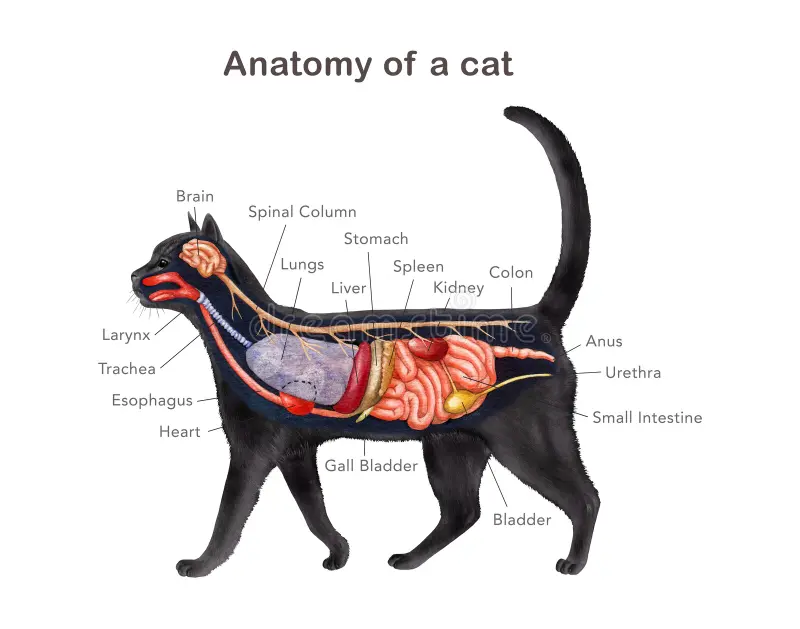
1. Cats Have a Gut Microbiome — Even Though They Are Obligate Carnivores
“Obligate carnivore” describes the cat’s nutritional physiology, not an absence of intestinal fermentation or microbes.
A 2014 review by Rochus, Janssens, and Hesta found that domestic cats have diverse microbiota in both the small and large intestines. The review also concluded that microbial fermentation can be significant in cats and that dietary fiber can influence the composition and activity of the microbiota.
In other words, the feline gut is not a sterile passageway for animal protein. Microorganisms interact with material that reaches the intestine, including dietary components that escape digestion in the small intestine.
This is one reason the phrase “cats are obligate carnivores” should not be turned into the much stronger claim that cats have no use for dietary fiber or that all plant-derived ingredients are irrelevant.
2. Why Cats Should Not Be Treated Like Small Dogs
Dogs and cats share many features of mammalian digestion, but their nutritional physiology is not identical. Cats have species-specific requirements and metabolic adaptations associated with their carnivorous evolutionary history.
The feline microbiome is also influenced by diet in ways that are not necessarily identical to what is observed in dogs. A 2020 review of feline gastrointestinal microbiota noted that age, body condition, diet, and inflammatory disease can all affect the microbial community. The authors also emphasized that research in cats remains more limited than in some other species.
This matters when interpreting online nutrition advice. A result found in a dog study may provide a useful research question, but it should not automatically be presented as a proven feline effect.
3. Protein and Carbohydrate Balance Can Change the Feline Microbiome
One of the clearest examples comes from studies that deliberately changed the protein-to-carbohydrate ratio of cat diets.
In a study of growing kittens, Hooda and colleagues found that different protein-to-carbohydrate ratios were associated with distinct fecal bacterial profiles. The study showed that diet composition affected the microbial community and that some bacterial groups differed between the dietary treatments.
A later 2021 study in 30 healthy adult cats compared foods containing different protein levels while protein replaced carbohydrate. The highest-protein diet produced measurable differences in fecal microbial composition and function, including greater signals related to amino-acid metabolism and mucin foraging, along with higher fecal ammonia and branched-chain fatty acids.
These results do not mean that “more protein is bad for cats.” They show something more specific: changing the balance of nutrients reaching the digestive tract can change the microbial environment.
The practical lesson is to evaluate the whole diet rather than turning one macronutrient into a universal rule.
4. Fiber Still Matters in a Carnivorous Species
Fiber is often misunderstood in cat nutrition.
Because cats are obligate carnivores, it is tempting to assume that fiber has no meaningful role. Research does not support such a simple conclusion.
The feline nutrition review by Rochus and colleagues found evidence that different fiber sources can influence feline microbiota and gastrointestinal function. Some fermentable fibers can be used by intestinal microbes, producing metabolites that interact with the intestinal environment.
However, “more fiber” is not automatically better. Fiber types differ in fermentability, physical properties, and physiological effects. A cat’s individual tolerance and the purpose of the diet also matter.
This is why a food label that simply lists a fiber percentage cannot tell you everything about how that food will interact with a cat’s gut.
5. A Bigger Microbiome Is Not Necessarily a Better Microbiome
Microbiome discussions often focus on whether a food increases “good bacteria.” That framing can be too simplistic.
Researchers study several different features of the gut ecosystem, including which organisms are present, how abundant they are, what genes and metabolic pathways they carry, and which compounds are produced.
Two cats can therefore have different microbial communities and both be healthy. Likewise, a microbial change observed in a controlled feeding study does not automatically translate into a clinical benefit.
A 2020 review of feline microbiome research emphasized that many factors affect the feline gut microbiota and that the functional importance of many observed changes is still being investigated.
For pet owners, this means that a product claiming to “balance the microbiome” should be evaluated carefully. Ask what was actually measured, in which cats, under what diet, and whether the study demonstrated a health outcome rather than only a microbial change.
6. What This Means When You Choose Cat Food
The microbiome adds another layer to the way you evaluate a cat food, but it does not replace the basics.
Start with nutritional adequacy. The food should be formulated for cats and appropriate for the intended life stage. Then consider calorie density, feeding amount, moisture, ingredients, and how the individual cat responds.
You can also think about the diet as a whole ecosystem rather than focusing on one ingredient:
• Protein supplies amino acids and other nutrients.
• Carbohydrates can provide digestible energy and, depending on the formulation, substrates that reach the lower gastrointestinal tract.
• Fiber can interact with intestinal microbes and influence stool and fermentation.
• Fat contributes energy and essential fatty acids.
• Moisture changes the physical and hydration characteristics of the meal.
For a deeper explanation of species-specific feline nutrient requirements, see Essential Nutrients Cats Need That Dogs Don’t
7. Wet vs. Dry Food Is Not the Same Question as Microbiome Health
Wet and dry food differ substantially in moisture, texture, energy density, and formulation. Those differences can affect the feeding environment, but food format alone does not tell you what a cat’s microbiome will look like.
Your existing Wet vs. Dry Cat Food guide covers the practical differences between the two formats. For Day 39, the more important point is that microbiome effects depend on the complete diet and the nutrients and substrates available to the intestinal ecosystem.
Similarly, the moisture percentage on a label should not be treated as a direct measure of digestive quality. Moisture and microbiome are related to different physiological questions.
This is another reason to avoid simple rules such as “wet food is better for the gut” or “dry food damages the microbiome.” Those claims require much more specific evidence than food format alone can provide.
8. What About Probiotics and Prebiotics?
Probiotics and prebiotics belong to the same microbiome conversation, but they deserve their own evidence-based discussion.
A prebiotic is a substrate intended to be selectively utilized by microorganisms and can alter the microbial environment. Probiotics are live microorganisms administered with the intention of providing a health benefit.
The important point for cat owners is that these are not interchangeable with a complete diet. Evidence varies by strain, ingredient, dose, outcome, and the health status of the cat.
Rather than assuming that any product labeled “microbiome support” has a proven effect, look for evidence in cats and for a clearly defined health outcome.
A later article in this content series will examine probiotics for pets in more detail.
9. When Gut Health Becomes a Veterinary Question
The microbiome is only one part of gastrointestinal health.
Repeated vomiting, persistent diarrhea, significant changes in stool quality, unexplained weight loss, poor appetite, or other ongoing digestive signs should not be managed simply by trying different foods or supplements.
The microbiome research field is developing quickly, but it does not provide a universal home diagnostic test for individual cats. A veterinarian may need to consider the cat’s history, physical examination, diet, parasites, medications, underlying disease, and other factors.
The goal is not to create a “perfect microbiome.” The goal is to support a diet and feeding routine that are appropriate for the individual cat while recognizing when professional evaluation is needed.
The Bottom Line
Cats have a complex gut microbiome, and their species-specific nutritional physiology shapes the way diet interacts with that ecosystem.
Research shows that protein-to-carbohydrate balance, fiber, age, body condition, and other factors can influence the feline microbiome. But the science does not support reducing feline gut health to one “good bacteria” list or one ideal diet.
For cat owners, the most useful approach is to start with complete and balanced nutrition, evaluate the whole diet, and treat microbiome claims with the same care you would apply to any other nutrition claim.
The cat gut microbiome is an important piece of feline nutrition — but it is a system to understand, not a number to chase.
For label context, see What Is Guaranteed Analysis in Pet Food?.
For moisture and food-format differences, see Wet vs. Dry Cat Food: Which Is Better for Your Cat?.
Scientific Sources / References
- Rochus, K., Janssens, G. P. J., & Hesta, M. (2014). Dietary fibre and the importance of the gut microbiota in feline nutrition: a review. Nutrition Research Reviews, 27(2), 295–307. — https://pubmed.ncbi.nlm.nih.gov/25623083/
- Hooda, S., et al. (2012). The gut microbiome of kittens is affected by dietary protein:carbohydrate ratio and associated with blood metabolite and hormone concentrations. British Journal of Nutrition. — https://pubmed.ncbi.nlm.nih.gov/22935193/
- Lyu, Y. L., et al. (2020). Past, Present, and Future of Gastrointestinal Microbiota Research in Cats. Frontiers in Microbiology, 11, 1661. — https://pubmed.ncbi.nlm.nih.gov/32793152/
- Badri, D. V., et al. (2021). Dietary Protein and Carbohydrate Levels Affect the Gut Microbiota and Clinical Assessment in Healthy Adult Cats. The Journal of Nutrition, 151(12), 3637–3650. — https://pubmed.ncbi.nlm.nih.gov/34587256/
- Wernimont, S. M., et al. (2020). The Effects of Nutrition on the Gastrointestinal Microbiome of Cats and Dogs: Impact on Health and Disease. Frontiers in Microbiology, 11, 1266. — https://pubmed.ncbi.nlm.nih.gov/32670224/