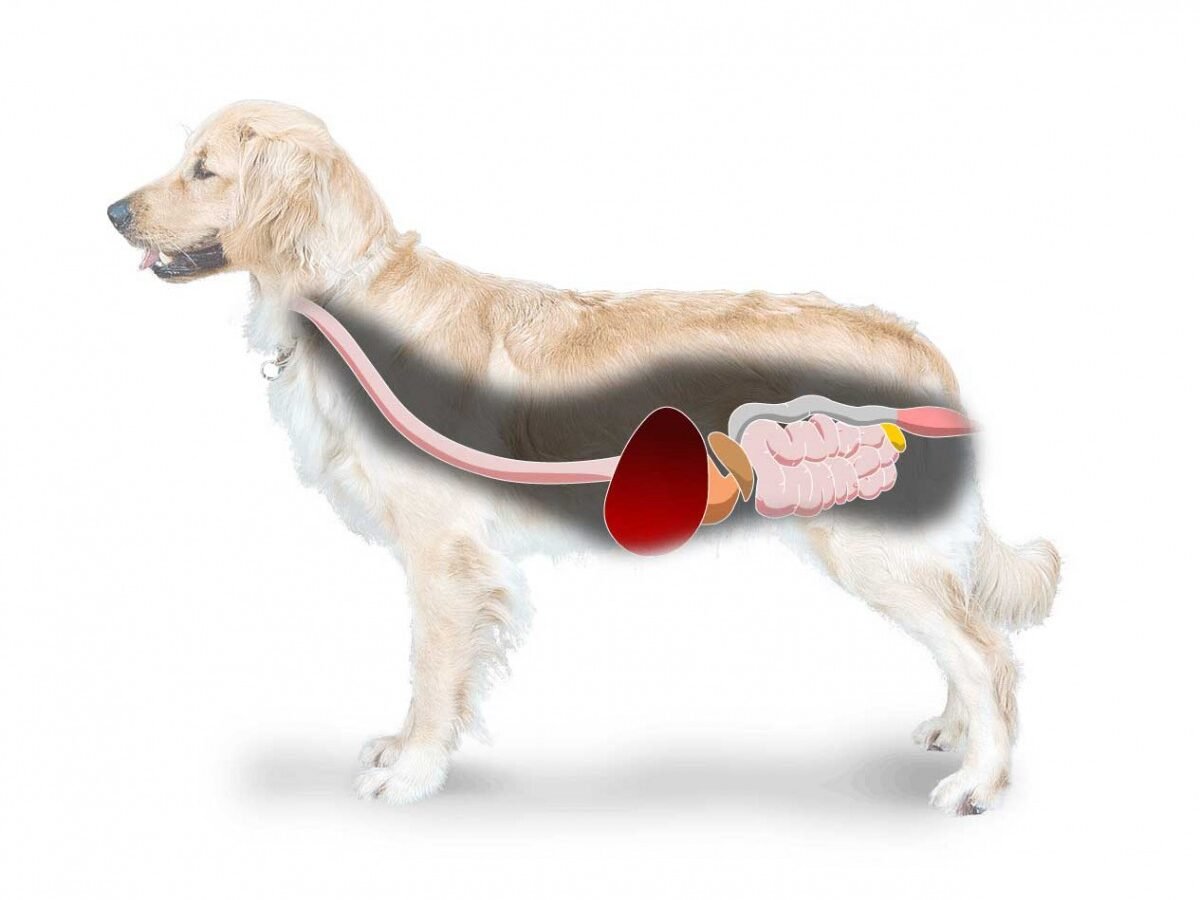
The Dog Gut Microbiome: How Food Choices Shape Digestive Health

When people talk about dog digestion, they often focus on protein, fat, fiber, ingredients, or calories. But digestion does not happen through the dog alone. The gastrointestinal tract contains a community of microorganisms that interacts with the food passing through it.
This community is commonly called the gut microbiome. Its composition and activity can vary between individual dogs and can be influenced by diet, age, environment, health status, medications, and other factors.
A 2020 review by Pilla and Suchodolski described food as an important substrate for the gastrointestinal microbiome of dogs and cats and noted that dietary components can influence microbial composition and function. The review also emphasized that the relationship between diet, microbiome, and long-term health remains complex.
For the nutritional foundation, see What Do Dogs Need in Their Diet? A Complete Nutrient Guide.
1. What is the dog gut microbiome?
The gut microbiome is the community of microorganisms living in the gastrointestinal tract. Researchers often use fecal samples to study it, but fecal measurements represent only part of the intestinal ecosystem.
The microbiome is not a fixed list of bacteria. It changes over time and differs between individual dogs. A microbiome profile should therefore not be treated as a simple score of digestive health.
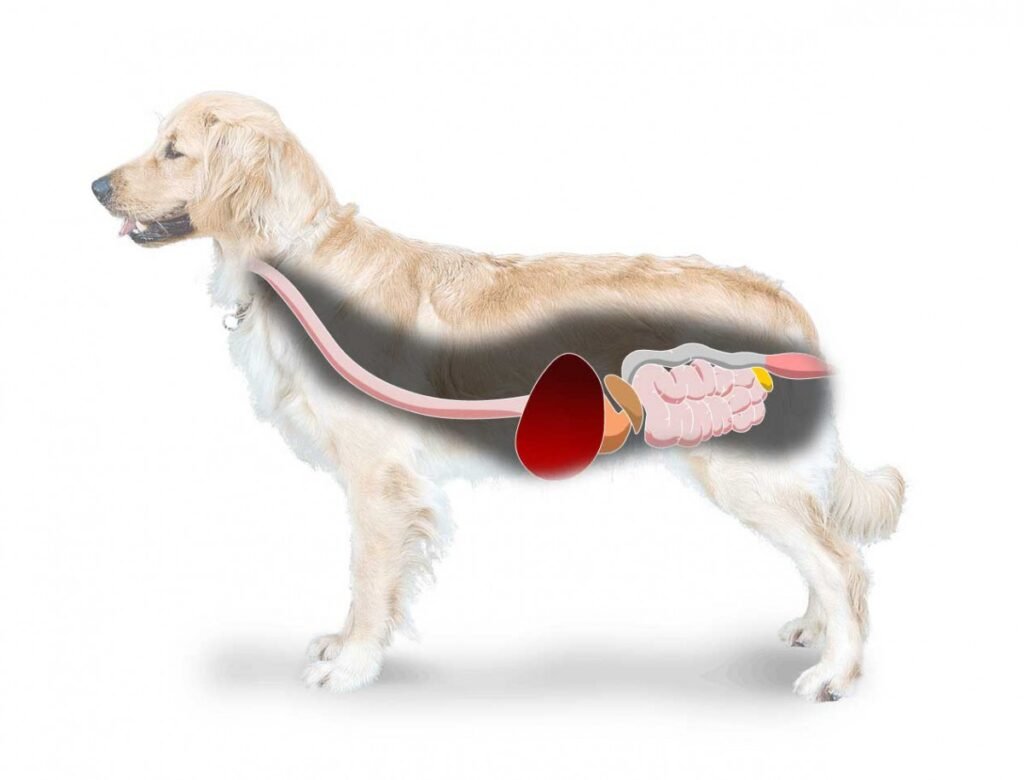
2. Food gives the microbiome its raw materials
Microorganisms use substrates that reach the gastrointestinal tract. Dietary fiber is one important example. Some fibers can be fermented by intestinal microbes, producing short-chain fatty acids and other metabolites.
A 2025 mSystems study by Bhosle and colleagues in healthy dogs found that changing dietary fiber altered microbiome and metabolome responses. This supports the idea that fiber is an active part of the diet–microbiome relationship, not simply a number on a label.
For a practical look at ingredients, see How to Read a Pet Food Ingredient List From Start to Finish.
3. Macronutrients can also influence the microbial environment
Protein, fat, and carbohydrate provide more than calories. Their amounts and sources can change the substrates available to microbes and may influence microbial composition and fermentation products.
Reviews of canine microbiome research report that diets with substantial differences in protein, carbohydrate, and fat can be associated with different microbial profiles and fecal metabolites. However, results vary between studies and individual dogs.
That is why it is not scientifically justified to say that one protein–fat–carbohydrate ratio is universally best for every dog’s microbiome.
4. Food changes can change the microbiome
The microbial community can respond when the diet changes. A 2026 study by Campbell and colleagues compared a minimally processed diet with an extruded kibble diet in healthy pet dogs and found distinct microbial and metabolic responses between the experimental diets, alongside differences in fecal consistency.
The study demonstrates that diet and the microbiome are connected. It does not prove that one food format is universally healthier or that a particular microbiome profile causes better health. The researchers also noted the need for further work on longer-term implications.
5. A change in bacteria is not automatically good or bad
Microbial communities naturally adapt to their environment. When the diet changes, the available substrates change, so some microorganisms may increase while others decrease.
The useful question is not simply whether a bacterial group went up or down. It is what changed, whether digestive function changed, and whether the evidence supports a meaningful health effect.
The 2020 nutrition-and-microbiome review also highlighted substantial variation between individual animals and limitations in the evidence base.
6. What does a healthy dog gut actually need?
There is no single universal list of bacterial species that every healthy dog must have in exactly the same proportions.
Researchers increasingly consider microbial function—such as fermentation, production of microbial metabolites, interaction with the intestinal environment, and relationships with digestion and immunity—rather than composition alone.
A 2025 review by Kim and colleagues describes the canine gut microbiome as diverse and functionally important while emphasizing that its composition is shaped by multiple biological and environmental factors.
7. Why fiber deserves special attention
Different fibers behave differently in the gastrointestinal tract. Some are more fermentable, some contribute more to stool bulk, and some influence water-holding capacity or transit.
The 2025 Bhosle study found that dietary fiber changed microbiome and metabolome responses in healthy dogs. The practical lesson is that the type and amount of fiber, along with the rest of the diet, matter more than simply asking whether a food contains fiber.
For another way to interpret nutrient numbers, see What Is Guaranteed Analysis in Pet Food? .
8. The microbiome does not replace basic nutrition
Microbiome science should be considered within the context of complete and balanced nutrition, appropriate calories, life stage, food safety, and the individual dog.
AAHA recommends individualized nutritional assessment and treats diet-specific factors and feeding management as parts of a broader nutrition assessment. Microbiome information should therefore complement, not replace, the fundamentals of nutrition.
9. What about probiotics and prebiotics?
Probiotics and prebiotics are often marketed as ways to “fix” or “balance” the gut microbiome. The evidence is more specific.
Prebiotics can provide substrates for selected microorganisms. Probiotics introduce live microorganisms intended to produce a particular effect. Outcomes can depend on the strain, dose, formulation, duration, and condition studied.
Reviews of canine probiotic evidence have noted that benefits are not uniform across strains or conditions and that evidence for some proposed uses remains limited. A probiotic ingredient therefore does not automatically demonstrate a measurable health benefit.
Probiotics will be examined in more detail in the Functional Nutrition phase.
10. When digestive changes deserve more than a food experiment
A change in stool after changing food can have many explanations. A temporary change during a transition is not the same as persistent gastrointestinal disease.
AAHA lists altered gastrointestinal function—including vomiting, diarrhea, reduced fecal quality, nausea, flatulence, and constipation—as nutritional risk factors that may warrant further assessment.
Persistent vomiting or diarrhea, unexplained weight loss, ongoing appetite changes, blood in the stool, marked lethargy, or other concerning signs should be assessed by a veterinarian rather than managed through repeated food changes.
11. What owners should actually take away
- Food can influence the dog gut microbiome, but the response is individual and complex.
- Fiber can be an important substrate for microbial fermentation, and different fibers can behave differently.
- Protein, fat, and carbohydrate levels and sources can also influence the microbial environment.
- A change in microbial composition is not automatically a sign of better or worse health.
- Microbiome research is still developing, especially when translating short-term changes into long-term health outcomes.
- Complete and balanced nutrition and appropriate feeding remain the foundation.
12. The real goal: support digestion without chasing a “perfect” microbiome
The dog gut microbiome is not a simple list of good bacteria and bad bacteria. It is a dynamic ecosystem that responds to the animal, the environment, and the food reaching the gastrointestinal tract.
Food choices matter because they determine which nutrients and substrates are available to the dog and its microbes. But current evidence does not support choosing a diet simply because it promises to create a particular microbiome.
A better approach is to look at the whole diet, the individual dog, digestive function, and the quality of evidence behind microbiome-related claims.
Medical boundary
This article provides general nutrition information and does not diagnose gastrointestinal disease, dysbiosis, food intolerance, or other medical conditions. Persistent vomiting, diarrhea, appetite changes, unexplained weight loss, blood in stool, or other concerning signs should be evaluated by a veterinarian.
Scientific Sources / References
- Pilla, R. & Suchodolski, J. S. (2020). The Role of the Canine Gut Microbiome and Metabolome in Health and Gastrointestinal Disease. https://pmc.ncbi.nlm.nih.gov/articles/PMC6971114/
- Bhosle, A., et al. (2025). Response of the gut microbiome and metabolome to dietary fiber in healthy dogs. mSystems, 10(1), e0045224. https://pubmed.ncbi.nlm.nih.gov/39714168/
- Kim, H., et al. (2025). Understanding the diversity and roles of the canine gut microbiome. Journal of Animal Science and Biotechnology, 16, 95. https://pubmed.ncbi.nlm.nih.gov/40615864/
- Campbell, L., et al. (2026). Diet-induced metabolic and faecal microbiome responses in pet dogs fed a minimally processed versus extruded kibble diet. https://pmc.ncbi.nlm.nih.gov/articles/PMC13107655/
- AAHA. 2021 AAHA Nutrition and Weight Management Guidelines. https://www.aaha.org/resources/2021-aaha-nutrition-and-weight-management-guidelines/