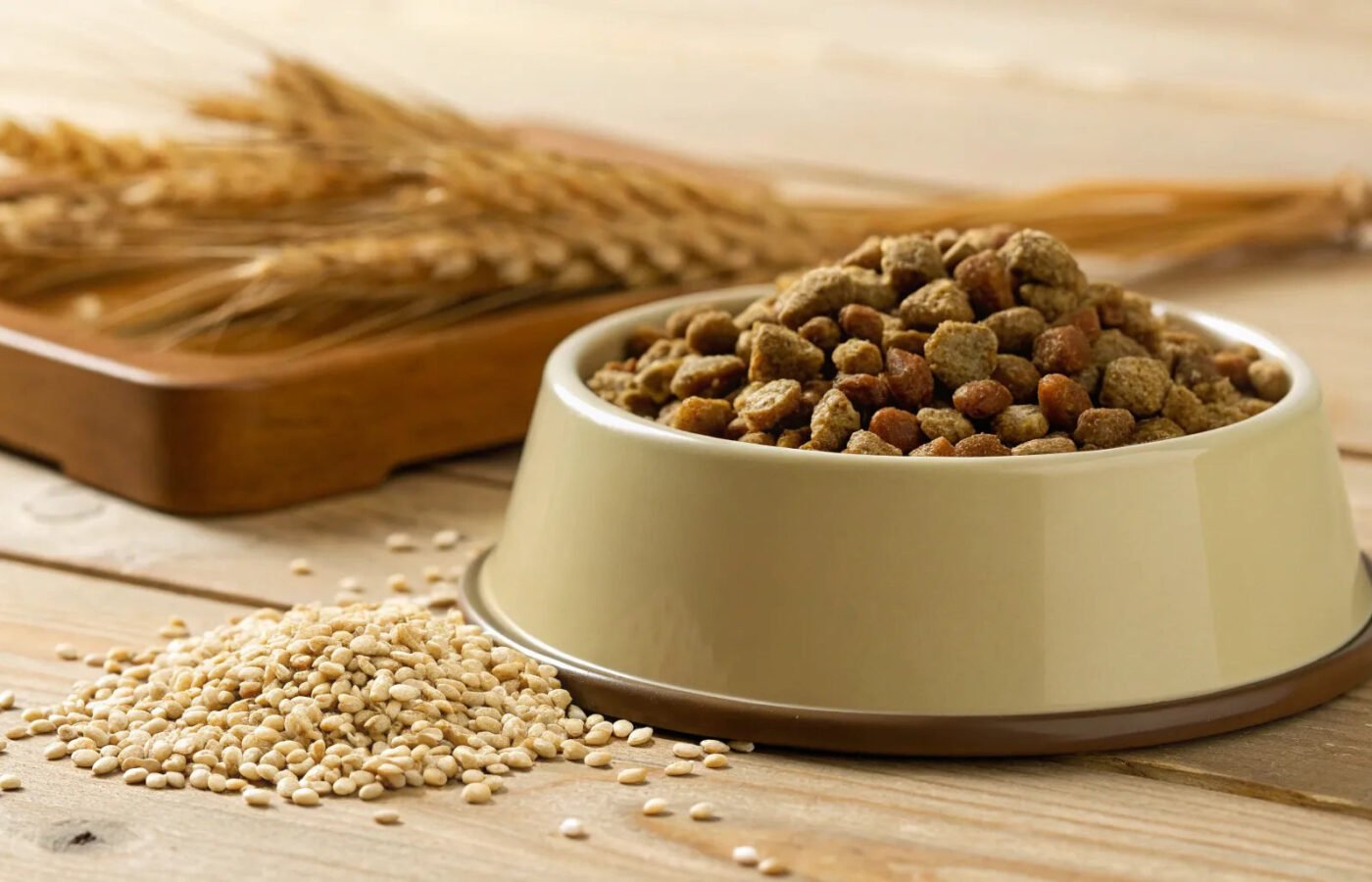
Grains, Fillers, and “Ancient Grains”: Separating Marketing From Nutrition Science

Grains in pet food attract more controversy than almost any other ingredient. They are often called “filler” blamed for digestive problems, or replaced with fashionable alternatives such as peas, potatoes, lentils, or so-called ancient grains.
The science is less dramatic. Grains can provide energy, carbohydrates, fiber, fatty acids, vitamins, and minerals. Whether a grain belongs in a particular pet food depends on the animal, the complete formulation, how the ingredient is processed, and the pet’s individual needs—not simply on whether it is called a grain.
What Counts as a Grain?
Grains generally include cereal grains such as rice, corn, wheat, barley, oats, and sorghum. They are seeds from grasses and are commonly used as sources of starch and other nutrients.
Different grains have different nutritional profiles. Their protein, fiber, starch, fatty acid, vitamin, and mineral contributions are not identical.
For the broader ingredient-reading framework, see How to Read a Pet Food Ingredient List.
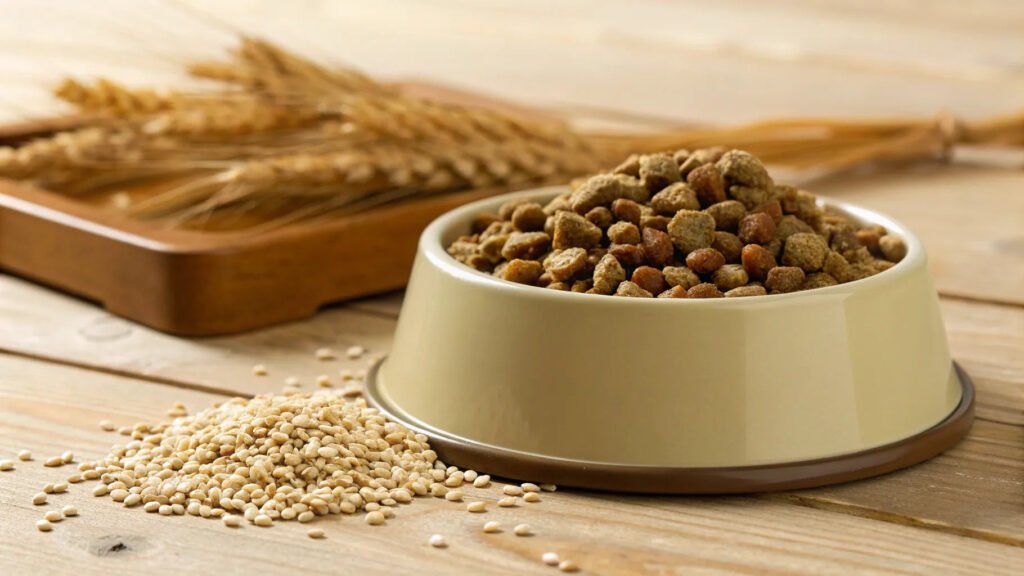
Are Grains Just “Fillers”?
No. The word “filler” suggests an ingredient has no nutritional purpose. That is not an accurate way to describe cereal grains in a properly formulated pet food.
WSAVA explains that nothing in a pet food is truly a filler simply because it is not animal-derived. Cereal grains can provide energy from starch and also contribute essential fatty acids, vitamins, minerals, and fiber.
This does not mean every diet needs grains. It means calling grains “fillers” skips the more useful question: what role does this ingredient play in the finished food?
What Do Grains Actually Contribute?
Depending on the grain and processing, grains can serve several functions:
• Energy: starch provides a source of energy.
• Fiber: some grains provide dietary fiber that can influence stool quality and the intestinal environment.
• Nutrients: grains can contribute vitamins, minerals, fatty acids, and protein.
• Formulation: starch can help create the structure of some dry and extruded foods.
A food does not become nutritionally superior simply because it contains more grains, just as it does not become superior simply because it contains none. Nutrition is about the finished formulation.
Can Dogs and Cats Digest Grains?
Yes. When properly processed and included in a complete and balanced diet, dogs and cats can digest cereal grains.
This is different from saying dogs or cats “need grains” An ingredient can be digestible and useful without being an essential ingredient that every animal must eat.
For the broader nutritional context behind what dogs actually require, see What Nutrients Do Dogs Need?.
What About “Ancient Grains”?
“Ancient grains” is a broad marketing term rather than a guarantee of superior nutrition. The phrase may be used for oats, barley, millet, sorghum, quinoa, or other less familiar cereal or seed ingredients.
But the nutritional value of a food cannot be established simply because its label says “ancient grains.” A food containing them still needs to be evaluated for its complete nutritional profile, calorie density, life-stage suitability, digestibility, and quality-control practices.
“Ancient” describes a category or marketing position; it does not automatically describe nutritional quality.
Does Grain-Free Mean Healthier?
Not automatically. Grain-free formulas usually replace grains with other carbohydrate or starch sources such as peas, lentils, chickpeas, potatoes, or tapioca.
The useful comparison is therefore formula versus formula, not simply grain versus grain-free.
FDA has investigated reports of canine dilated cardiomyopathy (DCM) involving diets labeled grain-free as well as diets containing grains. FDA has stated that it does not know whether there is a causal connection between diet and DCM. It would therefore be inaccurate to say that grain-free food simply “causes” DCM.
For a deeper evidence-based comparison, see Grain-Free, Raw, or Traditional Kibble.
Why Ingredient Lists Can Be Misleading
Ingredients are listed in descending order by weight. Fresh ingredients also contain water, so an ingredient near the top does not automatically contribute the largest amount of dry nutrients.
Likewise, seeing a grain near the top does not prove a food is nutritionally poor. Consider the guaranteed analysis, calorie content, nutritional adequacy statement, life stage, and the rest of the formula.
Our Reading a Dog Food Label guide explains how to read those pieces together, and the Guaranteed Analysis article goes deeper into why the numbers on the bag do not tell the whole story.
A Better Way to Judge Grains in Pet Food
Instead of asking “Are grains good or bad?”, ask:
• What specific grain is being used?
• What does it contribute to the formula?
• Is the food complete and balanced for the intended life stage?
• How does the food perform for the individual pet?
• What are the calorie density and nutrient guarantees?
• Is the manufacturer transparent about formulation and quality control?
• If the food is grain-free, what ingredients replaced the grains?
This moves the discussion from ingredient ideology to nutrition. These questions also build naturally on the framework in How to Read a Pet Food Ingredient List.
The Bottom Line
Grains are not automatically “fillers” and grain-free is not automatically healthier. Cereal grains can provide energy, fiber, fatty acids, vitamins, minerals, and other nutrients, depending on the ingredient and formulation.
“Ancient grains” can be interesting ingredients, but the phrase itself is not evidence that a food is nutritionally superior.
The strongest approach is to evaluate the complete diet: nutritional adequacy, nutrient balance, calories, life stage, formulation quality, and how the individual pet responds.
Good pet nutrition is rarely about finding one ingredient to praise or fear. It is about understanding what the whole diet is designed to do.
Authoritative External References
- For how ingredient order should be interpreted, see AAFCO’s Reading Labels guidance.
- For the definitions and nutritional context of pet food ingredients, see AAFCO’s Ingredients List guide.
- For the evidence-based discussion of “fillers” and pet nutrition myths, see WSAVA’s Nutrition FAQs and Myths.
- For the current FDA discussion of grain-free diets and canine DCM, see FDA’s DCM Questions & Answers.