How to Properly Feed Your Pet: Building a Routine That Actually Fits Real Life

“Feed your pet properly” sounds simple until real life gets involved. Work runs late. One family member gives a few treats. Another tops up the bowl. A dog gets a training reward. A cat walks away from breakfast and returns later. Suddenly, feeding is no longer one clean number printed on a food bag.
A better way to think about feeding is as a small daily system. The food needs to be nutritionally appropriate, but the routine around it also matters: when meals happen, who feeds the pet, where food is offered, how treats are counted, how water is provided, and what you watch over time.
AAHA describes feeding management broadly enough to include frequency, timing, location, method, the pet’s environment, and human-related factors—not just the food itself.
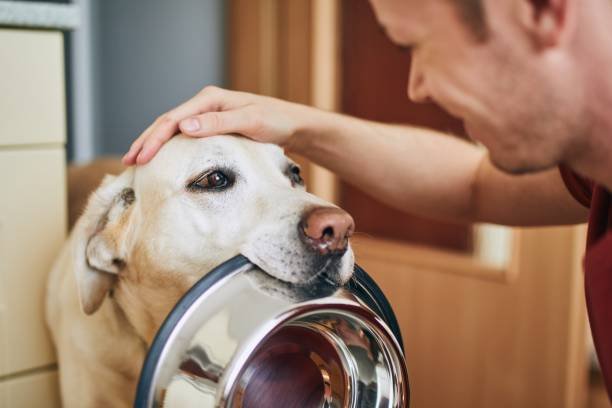
1. Start with the food, but do not stop at the label
The foundation is still the diet. For a healthy dog or cat, the main diet should be nutritionally complete and balanced for the appropriate species and life stage. But choosing an appropriate food is only the first step. A good diet can still be undermined by an inconsistent routine, excessive treats, food competition, or poor storage.
2. Build a schedule you can actually keep
There is no single feeding schedule that fits every dog or cat. Age, health, lifestyle, food type, and individual preference can all matter. Cornell notes that adult cats are commonly fed once or twice daily, while kittens generally need more frequent meals during growth.
The practical lesson is not to copy a universal timetable. Choose a routine that fits both the animal and the household, then keep it reasonably consistent.
Consistency also makes changes easier to notice. If meals normally happen at predictable times, a sudden refusal, unusual delay, or appetite change is easier to recognize.
3. Separate the feeding routine from household chaos
Many feeding problems are not really food-selection problems. They are management problems. Who is responsible for the meal? Where is the daily food amount recorded? Are treats coming from one person or several? Can one pet reach another pet’s bowl?
AAHA specifically identifies free-choice feeding, food competition, and environmental factors as issues that can interfere with a feeding plan. In a multi-person household, a shared note, phone reminder, or measured daily container can prevent accidental double-feeding.
The goal is not to make feeding complicated. It is to make the correct action the easy action.
4. Treats are part of the feeding system
Treats, toppers, table food, chews, supplements, and food used to give medication can all contribute calories. AAHA recommends keeping treats and other non-complete-and-balanced additions at no more than 10% of total daily calories so they do not displace or dilute the nutrition supplied by the main diet.
This does not mean treats are automatically bad. It means they should be planned rather than invisible. For training, some of the pet’s regular food can sometimes be reserved as rewards, turning training into part of the feeding plan.
5. Give water its own place in the routine
Water should not be treated as an optional accessory to the meal. Dogs and cats receive water from drinking and from food, and total water intake can vary with diet format and individual behavior.
Day 33 explored how water intake connects with urine concentration and kidney physiology. In everyday care, the practical rule is simpler: keep fresh drinking water available and pay attention to persistent changes in drinking or urination rather than trying to force an arbitrary amount.
6. Choose a feeding location that supports the pet
The place where a pet eats can matter because feeding is also an environmental event. Competition, noise, crowding, or another animal approaching the bowl can interfere with normal eating behavior.
In multi-pet homes, separate feeding areas may be useful when one pet eats another pet’s food, guards access to the bowl, or eats so quickly that the other animal cannot finish.
The best feeding location is therefore not necessarily the most convenient place for the human. It is the place where the pet can eat safely and predictably.
7. Make food safety part of the routine
Feeding properly also means handling the food properly. CDC and FDA recommend regular cleaning of bowls and utensils, following storage instructions, and washing hands before and after handling pet food or treats.
For canned or pouched food, unused portions should be promptly refrigerated or discarded according to safe-handling guidance. Dry food should be stored in a cool, dry place, with the original packaging information retained when possible.
8. Monitor the pet, not just the bowl
A feeding routine should include a feedback loop. The bowl tells you what you offered; the pet tells you how the routine is working.
Useful things to notice include appetite, body weight and body condition, stool quality, drinking and urination patterns, activity, and changes in eating behavior. WSAVA emphasizes individualized nutritional assessment and provides body-condition and muscle-condition tools for monitoring.
You do not need to obsess over daily numbers. A simple weekly check is often more useful: Is the pet eating normally? Does body condition look stable? Has stool changed? Is water consumption noticeably different?
9. Know when the routine should change
A good routine is not a rigid routine. It should change when the pet’s circumstances change.
Examples include growth, aging, changes in activity, reproductive status, illness, medication, dental problems, changes in body condition, or a veterinary recommendation.
Persistent appetite changes, repeated vomiting or diarrhea, unexplained weight change, marked changes in thirst or urination, or difficulty eating are reasons to involve a veterinarian rather than simply changing food on your own. The AAHA Nutrition and Weight Management Guidelines and WSAVA Global Nutrition Guidelines emphasize that feeding plans should be individualized and adjusted as a pet’s needs change.
10. A simple daily system that survives real life
- Choose a complete and balanced main diet appropriate for the pet’s species and life stage.
- Decide who is responsible for feeding and when meals normally happen.
- Measure or otherwise control the planned daily food amount rather than repeatedly topping up without tracking.
- Keep treats, toppers, chews, supplements, and table foods inside the overall calorie picture.
- Provide fresh drinking water and keep the water area clean.
- Feed in a location where the pet can eat without unnecessary competition or disturbance.
- Store food according to the label and clean bowls and utensils regularly.
- Do a quick weekly check of appetite, body condition, stool, drinking, urination, and routine changes.
11. Three realistic routine examples
| Household | Routine structure | What to monitor |
| Adult dog / busy workday | Feed at predictable daily windows; reserve part of the planned food for training if useful; keep water available. | Body condition, appetite, stool, activity, and whether family members add extra food. |
| Adult cat / flexible schedule | Use a consistent rhythm that fits the cat and owner; avoid uncontrolled refilling; use separate feeding space if needed. | Appetite, food-seeking changes, body condition, drinking and urination. |
| Multi-pet household | Assign each pet a defined feeding place; prevent access to the other pet’s food; record who fed each animal. | Food stealing, eating too fast, repeated leftovers, or weight change. |
12. The real goal: a routine you can repeat
Proper feeding is not about creating the most complicated schedule. It is about creating a system that reliably delivers the right food, in a sensible way, while leaving room to notice when the animal changes.
The strongest routine is therefore not the one that looks perfect on paper. It is the one that a real household can follow, monitor, and adjust when the pet’s needs change.
Nutrition becomes care when the information on the label turns into small actions that happen consistently: the right food, a workable rhythm, controlled extras, clean water, safe handling, and attention to the animal in front of you.
If you want to review the nutrient foundation first, start with What Do Dogs Need in Their Diet? .
For the water pathway, see Wet vs. Dry Cat Food and its explanation of water intake, urine, and kidney physiology.
For label interpretation, see What Is Guaranteed Analysis in Pet Food? .
Quick Summary
- Proper feeding is a system, not just a feeding amount.
- Choose a nutritionally appropriate main diet for species and life stage.
- Use a realistic and reasonably consistent meal routine.
- Treats and other extras count as part of total intake.
- Fresh water should always be available.
- Separate pets when food competition or food stealing is a problem.
- Make storage, bowl cleaning, and hand hygiene part of feeding.
- Monitor appetite, body condition, stool, drinking, urination, and behavior over time.
- Change the routine when life stage, health, activity, or veterinary needs change.
Scientific Sources / References
- AAHA. 2021 AAHA Nutrition and Weight Management Guidelines.
https://www.aaha.org/resources/2021-aaha-nutrition-and-weight-management-guidelines/ - WSAVA Global Nutrition Committee. Global Nutrition Guidelines.
https://wsava.org/Global-Guidelines/Global-Nutrition-Guidelines/ - Cornell Feline Health Center. How Often Should You Feed Your Cat?
https://www.vet.cornell.edu/departments/cornell-feline-health-center/health-information/feline-health-topics/how-often-should-you-feed-your-cat - AAHA. Prevention of Obesity.
https://www.aaha.org/resources/2021-aaha-nutrition-and-weight-management-guidelines/prevention-of-obesity/ - Cornell Feline Health Center. Hydration.
https://www.vet.cornell.edu/departments-centers-and-institutes/cornell-feline-health-center/health-information/feline-health-topics/hydration - CDC. About Pet Food Safety.
https://www.cdc.gov/healthy-pets/about/pet-food-safety.html - FDA. Tips for Safe Handling of Pet Food and Treats.
https://www.fda.gov/animal-veterinary/animal-health-literacy/tips-safe-handling-pet-food-and-treats