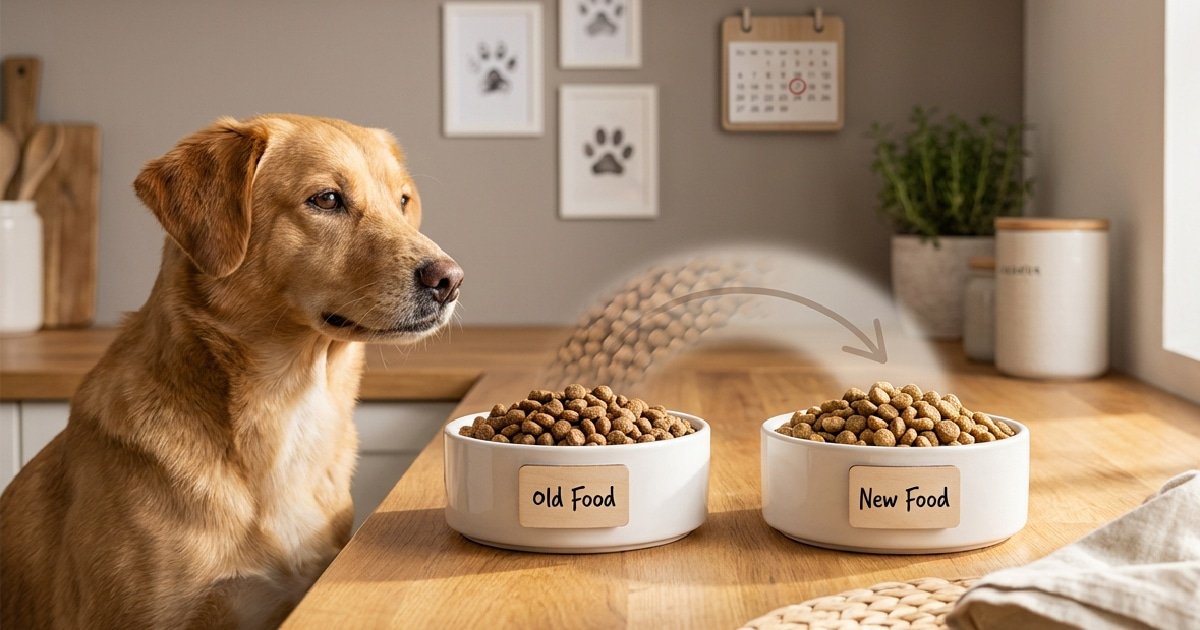
Transitioning Food Without Upsetting the Stomach: A Step-by-Step Approach

Changing a pet’s food sounds simple: buy the new food, put it in the bowl, and start the new routine. In practice, a sudden change can be harder on the digestive system—and some pets are much less willing than others to accept a new smell, texture, or taste.
A better approach is to treat a food change as a transition rather than a switch. For many healthy dogs and cats, gradually increasing the proportion of the new food gives the pet time to adapt while allowing the owner to notice changes in appetite, stool, or acceptance.
The exact pace does not need to be identical for every pet. AAHA guidance notes that dietary adjustments over about 4–7 days may reduce negative gastrointestinal responses, while AAHA’s feline guidance describes gradual transitions over 7–10 days. Some cats may need considerably longer because food texture, odor, taste, and familiarity can strongly affect acceptance.
If you are building the overall feeding system first, start with How to Properly Feed Your Pet. This guide focuses specifically on what to do when the food itself needs to change.
1. First, make sure you actually need to change the food
Not every change requires a new diet. If a pet is healthy, maintaining an appropriate body condition, eating normally, and doing well on a complete and balanced diet, there may be no reason to change food simply because another product is trending or marketed as an upgrade.
A change may be reasonable when the pet’s life stage, nutritional needs, household circumstances, availability of the current product, or veterinary recommendation changes. The important point is to separate a genuine reason for changing the diet from the desire to keep experimenting with foods.
Before starting, check the new product’s feeding and nutritional information. If the goal is to replace the current main diet, confirm that the new food is appropriate for the pet’s species and life stage and is intended to provide complete and balanced nutrition.
2. Change one major thing at a time when possible
A transition is easier to interpret when the new food is the main variable. If you change the food, treats, supplements, feeding schedule, and portion size all at once, it becomes difficult to know what caused a digestive or appetite change.
The practical goal is to avoid unnecessary changes during the transition. Keep the feeding routine, bowl location, and treat pattern as stable as reasonably possible.
3. Use a gradual starting ratio
A simple starting point is to introduce a small amount of the new food alongside the old food, then increase the new portion over several days as the pet accepts it.
This is a practical example, not a universal prescription. AAHA guidance supports gradual dietary adjustment, and veterinary guidance may call for a slower or different schedule depending on the pet and the reason for the change.
| Stage | Old Food | New Food |
| Days 1–2 | About 75% | About 25% |
| Days 3–4 | About 50% | About 50% |
| Days 5–6 | About 25% | About 75% |
| Day 7+ | 0% | 100% |
Research context: In a 2023 study of 13 healthy Beagle puppies, a seven-day gradual transition was associated with a lower incidence of diarrhea than an abrupt diet change, along with differences in fecal microbiota. The study was small and involved puppies, so its findings should not be treated as proof that every adult dog or cat requires exactly seven days.
4. Let the pet’s response determine the pace
The schedule is a starting framework, not a deadline. If the pet is eating normally and stools remain normal, the transition can continue. If stool becomes noticeably softer, appetite drops, or the pet becomes reluctant to eat the mixture, slow down rather than automatically pushing forward.
Cornell’s guidance for dogs notes that if diarrhea follows a food change, returning to the original diet until stools firm up and then restarting the transition more gradually may be appropriate. That advice is for a specific clinical situation and should not be used to self-treat persistent gastrointestinal disease.
5. Dogs and cats do not always transition the same way
Dogs often tolerate a relatively straightforward gradual transition. Cats can be more complicated because food acceptance may depend heavily on smell, texture, temperature, and familiarity.
AAHA’s pet-parent transition guidance notes that cats may need much longer than dogs to accept a new food, particularly when the texture or format changes. Cornell also recommends gradually switching a cat while continuing to offer some of the old food during the change.
For cats, the priority is not to win a battle over the new food. A cat that refuses food should not simply be left without eating while the owner waits for acceptance. Cornell notes that sustained loss of appetite can become medically important in cats, so a cat that stops eating or is losing weight warrants veterinary attention.
6. A texture change may need a different strategy
Switching from one dry kibble to another may be easier for some pets than moving from dry to canned food, or from canned to dry. The nutritional composition may change at the same time as moisture, texture, smell, and eating behavior.
For a cat that strongly prefers one texture, a slower transition may be more realistic than forcing a fixed seven-day schedule. A veterinarian may also recommend a specific transition strategy when the diet is being changed for a medical reason.
If you are changing between wet and dry formats, see Wet vs. Dry Cat Food for what moisture differences can change—and what they do not automatically mean about nutritional quality.
7. Watch the right signals during the transition
You do not need to monitor every detail. A few practical signals tell you whether the transition is moving in the right direction.
| Signal | What to watch |
| Appetite | Is the pet eating planned meals with normal interest? |
| Stool | Is stool reasonably formed, or is there repeated diarrhea? |
| Vomiting | Is vomiting occurring repeatedly or becoming more frequent? |
| Acceptance | Does the pet willingly eat the new food? |
| Body condition | Does the pet maintain an appropriate body condition? |
| Behavior | Is the pet otherwise acting normally? |
8. Do not hide a problem by changing food repeatedly
One of the biggest practical mistakes is responding to every digestive change by immediately buying another food. Frequent switching can make it harder to identify whether the original food, the transition itself, treats, or an underlying health problem is responsible.
If a pet repeatedly develops vomiting, diarrhea, appetite changes, weight loss, or other symptoms around food changes, the goal should shift from finding the next food to finding the reason for the symptoms.
9. When the transition is for a medical diet, follow the veterinary plan
A therapeutic diet is different from an ordinary lifestyle change. If a veterinarian recommends a diet for kidney disease, gastrointestinal disease, food allergy evaluation, urinary disease, or another medical condition, follow the recommended transition and monitoring plan rather than improvising a generic schedule.
This is particularly important for cats. Cornell notes that cats with chronic kidney disease may have difficulty accepting therapeutic diets and that maintaining food intake during the transition is important.
10. A simple transition checklist
- Choose the reason for the change and confirm the new food fits the pet’s species, life stage, and nutritional needs.
- Keep the rest of the routine as stable as practical.
- Start with a small proportion of the new food.
- Increase the new food gradually rather than treating the transition as a deadline.
- Monitor appetite and stool each day.
- Slow down if the pet is not tolerating the current ratio.
- Avoid repeatedly switching foods just because the first transition is imperfect.
- Contact a veterinarian if the pet stops eating, has persistent vomiting or diarrhea, loses weight, or shows other signs of illness.
11. The real goal: a food change the pet can tolerate
A successful food transition is not about completing a seven-day chart perfectly. It is about moving from one appropriate diet to another while maintaining adequate food intake and minimizing unnecessary digestive disruption.
For many healthy pets, a gradual transition is a simple way to make the change easier to manage. But the correct pace is the one that fits the individual pet. Dogs may move through the process relatively quickly; some cats need much more patience, especially when texture or smell changes.
If the pet is not tolerating the change, the answer is not always another food. Sometimes the right next step is simply to slow down. And when symptoms persist or appetite falls, the transition should give way to veterinary assessment.
Medical boundary
This article provides general nutrition and feeding information. It does not diagnose food intolerance, food allergy, gastrointestinal disease, or other medical conditions. Persistent vomiting or diarrhea, refusal to eat, unexplained weight loss, marked lethargy, pain, or other concerning signs should be assessed by a veterinarian.